

TL;DR:
- Define clear academic, career, and cultural goals before choosing a program.
- Research program types, entry requirements, and accreditation to find the best fit.
- Maximize global experience through engagement, networking, and practical opportunities for future success.
Choosing to study abroad for a fast-track business management or accounting degree is one of the most demanding, and most rewarding, decisions you can make. The pressure is real: you need to pick the right country, the right program format, and the right institution, often while managing work, family, or financial constraints back home. Get it right, and you graduate faster with a globally recognized credential and a network that spans continents. Get it wrong, and you waste time and money on a program that doesn’t fit your goals. This guide walks you through every critical step, from setting your objectives to landing your first international career opportunity.
Table of Contents
- Define your study abroad goals for accelerated degrees
- Research program choices and entry requirements
- Balance academics, budgeting, and lifestyle abroad
- Maximize your global experience and career opportunities
- Why fast-track students need more than just speed
- Ready for the next step? Find your ideal fast-track program
- Frequently asked questions
Key Takeaways
| Point | Details |
|---|---|
| Set clear academic goals | Define what you want from your study abroad experience and align with fast-track options in management or accounting. |
| Research program requirements | Understand each institution’s entry criteria and compare accelerated business and accounting options. |
| Plan financials and lifestyle | Prepare budgets and routines to thrive in intensive, fast-paced study environments. |
| Leverage international exposure | Use global networking and internships to improve post-graduation career prospects. |
Define your study abroad goals for accelerated degrees
With the stakes high for your future, it’s vital to start with a clear picture of your goals. Before you browse program brochures or compare tuition fees, you need to know exactly what you want out of this experience. Articulating clear academic and career goals before selecting a program is the single most important step in your planning process. Without that clarity, every decision that follows becomes a guess.
Start by asking yourself a few direct questions. Do you want a bachelor’s degree or a master’s? Are you focused on management, accounting, or a blend of both? Which countries offer the recognition and career pathways that match your ambitions? Do you prefer in-person study, online learning, or a hybrid format that lets you stay connected to your home country while earning an internationally recognized credential?
Here are the key goal areas to define before you apply:
- Degree level: Bachelor’s, master’s, or professional qualification
- Field of focus: Business management, accounting, or a combined track
- Preferred study location: UK, Singapore, Hong Kong, Australia, or fully online
- Time commitment: Can you handle a compressed two-year bachelor’s or a one-year MBA?
- Language readiness: Do you meet English proficiency requirements, or do you need preparation?
- Long-term career target: Local employment, international mobility, or entrepreneurship
Accelerated programs are not for everyone. They demand focus, discipline, and a willingness to move fast. But if you thrive under structure and want to enter the workforce sooner, a fast-track route is a genuine advantage. Think honestly about your learning style. If you need extended time to absorb concepts, a compressed schedule may create unnecessary stress rather than opportunity.
Cultural experience matters too. Many students underestimate how much they grow personally when they study in a new country. Even if your program is partially online, spending time in a different academic environment changes how you think about business problems, leadership, and collaboration.
Pro Tip: Write down your top three career goals and check every program you consider against them. If a program can’t clearly help you reach at least two of the three, move on. Use resources on fast-track preparation to build a structured checklist before you start comparing schools.
Research program choices and entry requirements
Once your goals are set, the next step is matching them to the right academic opportunities. The landscape of fast-track degrees in business and accounting is broader than most students expect, and understanding the differences between program types can save you months of misdirected effort.
Fast-track programs generally fall into two categories. Accelerated undergraduate programs compress a traditional three or four-year degree into two years through intensive scheduling and year-round study. Credit transfer programs recognize prior learning or professional qualifications, allowing you to enter at an advanced stage and graduate sooner. Both routes are legitimate, but they suit different student profiles.
Here’s a side-by-side comparison to help you think it through:
| Feature | Accelerated (2-year) | Credit transfer entry |
|---|---|---|
| Prior degree needed | No | Sometimes |
| Prior work experience | Helpful | Often required |
| Study pace | Very intensive | Moderate to intensive |
| Typical duration | 2 years | 1 to 1.5 years |
| Best for | School leavers, career changers | Professionals upskilling |
Understanding fast-track entry requirements is equally important. Entry requirements may include prior coursework, English proficiency, and professional experience, and these vary significantly between business and accounting tracks. Accounting programs often require demonstrated numeracy or prior finance coursework, while management programs may place more weight on leadership experience or personal statements.
You also need to distinguish between pathway programs and direct entry. A pathway program, sometimes called a foundation course, bridges the gap if you don’t yet meet full entry requirements. Direct entry means you qualify immediately and can start your degree without additional preparation. Knowing which category you fall into shapes your timeline significantly.
Accreditation is non-negotiable. A degree from an institution regulated by a recognized body, such as Ofqual in the UK, carries genuine weight with employers worldwide. When you research options, always verify the accreditation status and check whether the degree is recognized in your target employment market. Poor program selection at this stage can undermine years of hard work.
- Verify Ofqual or equivalent regulatory body recognition
- Check if the institution has partnerships with employers in your target country
- Confirm whether your credits transfer if you decide to continue to a master’s
- Ask about alumni outcomes, not just rankings
Balance academics, budgeting, and lifestyle abroad
Now that you know what programs you qualify for, let’s look at the real-world logistics of thriving as an accelerated student abroad. Fast-track study is not just academically intense. It also demands that you manage your money, your health, and your daily routine with unusual discipline.
Fast-track degrees mean a heavier academic load, higher cost efficiency, and compressed schedules. That last point is important: while you pay for fewer semesters, you must budget carefully because the pace leaves little room for part-time work during peak study periods.

Here’s a general cost comparison across popular study destinations:
| Country | Avg. annual tuition (USD) | Monthly living costs (USD) |
|---|---|---|
| United Kingdom | $14,000 to $22,000 | $1,400 to $2,000 |
| Singapore | $12,000 to $18,000 | $1,600 to $2,200 |
| Australia | $15,000 to $25,000 | $1,500 to $2,100 |
| Hong Kong | $10,000 to $16,000 | $1,800 to $2,500 |
To stay on track financially and academically, follow these steps in order:
- Build a full cost budget before you arrive, including tuition, housing, food, visa fees, health insurance, and a small emergency fund.
- Set up a weekly study schedule during the first week of class and protect it like a meeting you cannot cancel.
- Identify your campus support resources early: academic advisors, mental health services, and peer study groups.
- Plan one social or cultural activity per week to prevent burnout without derailing your studies.
- Review your budget monthly and adjust before small overspending becomes a crisis.
Pro Tip: Download a fast-track degree checklist to organize every pre-departure and in-program task. Students who use structured checklists report fewer surprises and better academic performance in the first semester.
Healthy routines are not optional in a compressed program. Sleep, exercise, and regular meals directly affect your ability to absorb and apply complex business or accounting concepts. Treat your physical wellbeing as part of your academic strategy, not a luxury.
Maximize your global experience and career opportunities
With academics and logistics handled, set your sights on making the most of your time overseas. The degree itself is the foundation, but the relationships, experiences, and skills you build around it are what separate good graduates from exceptional ones.
International experience in business or accounting increases employability and salary potential, with some studies pointing to a career placement boost of up to 30%. That statistic reflects something employers consistently tell us: they want candidates who can navigate different cultures, communicate across borders, and adapt to unfamiliar environments.
“The students who get the most from studying abroad are not the ones who study hardest in isolation. They’re the ones who engage with everything around them.”
Here’s how to build a global profile that stands out:
- Join at least one campus organization in your first month, whether it’s a business club, a student council, or an industry-specific group
- Attend networking events and career fairs hosted by your institution or local industry associations
- Seek a local internship or work placement, even a short one, to gain in-country professional experience
- Find a mentor, ideally someone working in your target industry in the country where you’re studying
- Document your international experience on your resume with specific outcomes, not just job titles
Language skills are a bonus even if your program is in English. Learning basic conversational phrases in the local language shows cultural respect and opens doors that pure academic credentials cannot. Employers notice candidates who make that extra effort.
Explore the full scope of international experience benefits and look into career outcomes abroad to understand how different study locations translate into specific career advantages. The country where you study often shapes the professional network you build, so choose strategically.
Why fast-track students need more than just speed
Speed is a real advantage. Graduating in two years instead of three or four saves money and gets you into the workforce faster. But here’s what we’ve seen working with international students across multiple cohorts: the students who focus only on finishing quickly often miss the most valuable parts of the experience.
The long-term value of studying abroad goes well beyond the credential itself. It’s the ability to walk into a boardroom in Singapore, London, or Lagos and connect with people from entirely different backgrounds. That skill doesn’t come from rushing through coursework. It comes from genuine engagement, from asking questions in class, from accepting a dinner invitation from a classmate you barely know, from choosing the harder conversation over the comfortable shortcut.
We’ve also seen students skip internships because they felt too busy, avoid campus events because they seemed optional, and graduate with a strong GPA but a thin professional network. Don’t let speed become an excuse for staying in your comfort zone. The credential opens doors. What you do with those open doors is entirely up to you. Invest in relationships, stay flexible when plans change, and treat every class discussion as a real-world case study. That’s where the lasting value lives.
Ready for the next step? Find your ideal fast-track program
If you’re ready to move from planning to action, here’s how SeekStudy can empower your journey. Everything covered in this guide, from clarifying your goals to understanding entry requirements and maximizing your global experience, connects directly to what we’ve built at SeekStudy.
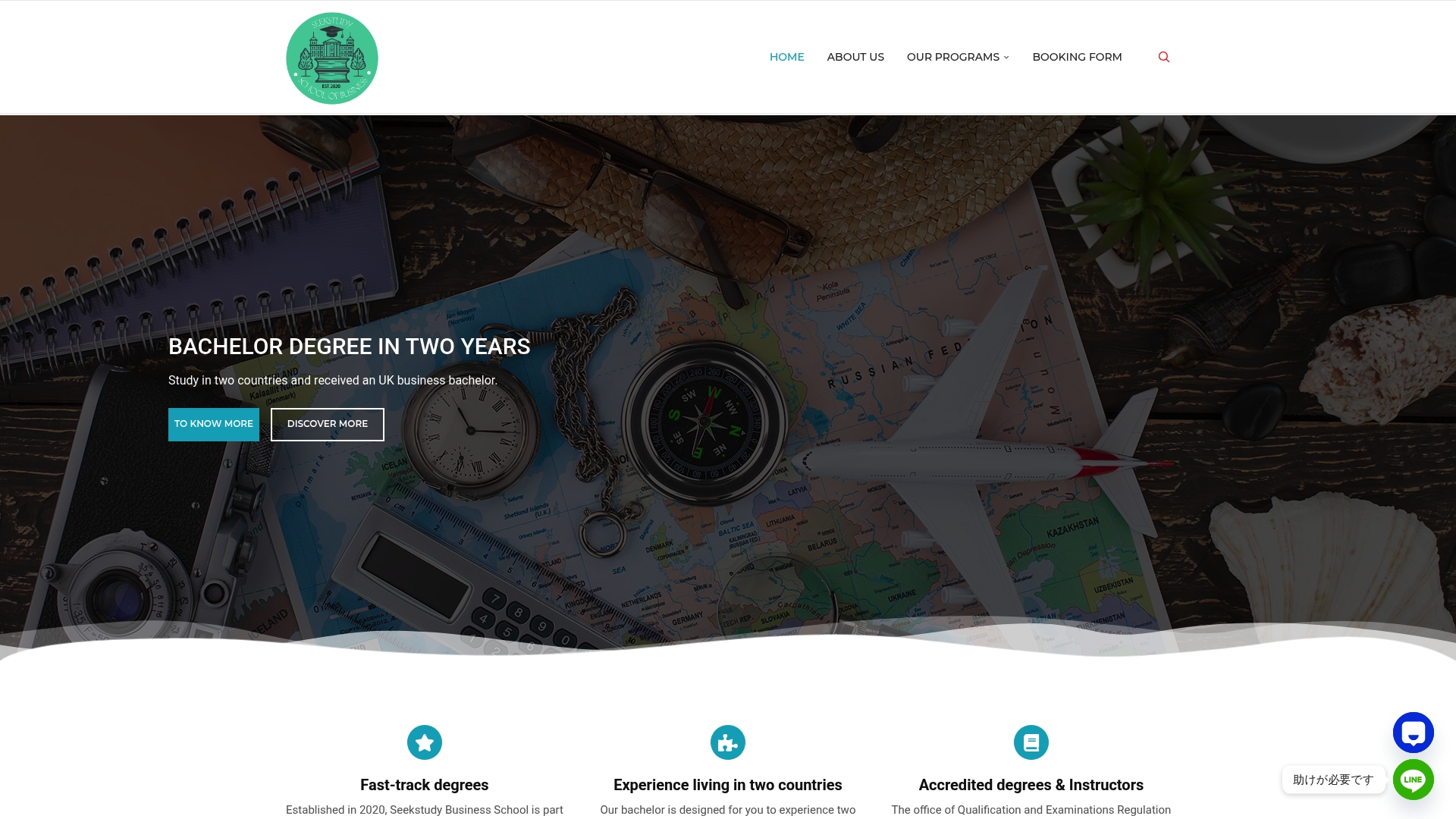
Explore our business management degree to see how a two-year accelerated bachelor’s program can fit your timeline and career goals. If you’re still assessing your eligibility, our fast-track entry guide walks you through exactly what you need to qualify. And if you want a broader look at everything we offer, from foundation courses to executive MBAs, start at study abroad at SeekStudy and find the program that fits your ambitions.
Frequently asked questions
What are the main requirements for fast-track business or accounting degrees abroad?
Requirements typically include prior coursework, English proficiency, and professional experience, along with a high school diploma or equivalent. Accounting tracks may also require demonstrated numeracy skills.
How can students cope with the intense workload in accelerated study abroad programs?
Effective time management, regular self-care routines, and using a structured checklist are the most reliable strategies. Fast-track degrees bring heavier academic loads and compressed schedules, so planning ahead is essential.
Does studying abroad in business or accounting actually improve job prospects?
Yes. International experience boosts employability and salary potential by up to 30%, according to career placement data from international business programs.
How do I choose between business management and accounting for fast-track study abroad?
Base your decision on your career goals and personal strengths, then verify the entry requirements for each program at your shortlisted institutions. Management suits those drawn to leadership and strategy, while accounting fits detail-oriented, finance-focused learners.