
TL;DR:
- Online management and accounting degrees are credible and widely recognized globally, especially with AACSB accreditation.
- Modern programs combine flexible asynchronous coursework with live sessions and peer collaboration for working students.
- AI enhances personalized learning but requires balanced use to develop critical thinking and practical skills effectively.
More than half of graduate business students worldwide now complete at least part of their studies online, yet many international applicants still assume that a campus address equals a better degree. That assumption is costing people real career opportunities. Accredited online programs in management and accounting are no longer a compromise. They are, in many cases, the smarter path for working professionals and international students who need recognized credentials without pausing their lives. This guide breaks down exactly how these programs work, what to watch out for, and how to choose a program that will actually open doors in 2026.
Table of Contents
- How online programs work in 2026
- AI and adaptive technology: Personalized learning at scale
- Accreditation and standards: What makes a quality program?
- Challenges and the future: What to watch for in online study
- Why the future of online learning is more personal—and harder—than most expect
- Explore top flexible online degrees for your global career
- Frequently asked questions
Key Takeaways
| Point | Details |
|---|---|
| Flexible pathways | Top online programs in 2026 let you study part-time, asynchronously, and finish in 1-2 years for global credentials. |
| Tech-powered support | AI and adaptive platforms in online learning offer personalized tutoring, but require mindful engagement to avoid over-dependence. |
| Quality assurance | Accreditation, like AACSB, signals international recognition and career value for management and accounting degrees. |
| Critical challenges | Success in online study demands strong self-direction, cohort engagement, and careful tech access planning. |
How online programs work in 2026
Online management and accounting degrees have moved far beyond pre-recorded lectures and discussion boards. Today’s top programs combine asynchronous coursework (content you access on your own schedule) with scheduled live sessions, peer collaboration, and globally recognized credentials. The structure is designed for people who are already working, already living abroad, or managing responsibilities that make a fixed campus schedule impossible.
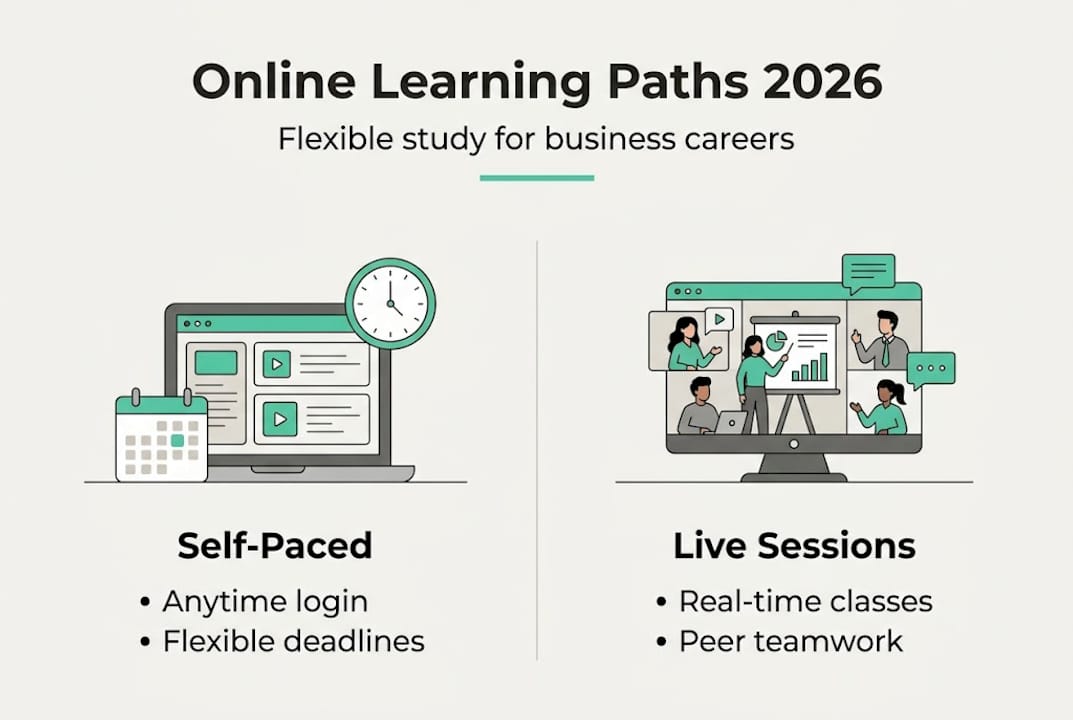
Most programs fall into one of two formats. Self-paced asynchronous tracks let you log in and complete assignments whenever your schedule allows. Blended or cohort-based formats include live weekend sessions paired with asynchronous modules, which creates accountability and community without requiring relocation. For example, programs like the UGA MPAcc are 100% online, one year in length, and cost around $674 per credit, all while holding AACSB accreditation. The Hult Global Online MBA takes a part-time, two-year approach with live weekend sessions plus async learning.
AACSB accreditation, which stands for Association to Advance Collegiate Schools of Business, is the gold standard for business education globally. A program carrying this credential has been reviewed against rigorous standards for faculty, curriculum, and outcomes. It matters because employers and graduate schools in the US, UK, Singapore, and Australia recognize it immediately.
Here is a quick comparison of what to look for when choosing a program:
| Feature | Strong program | Weak program |
|---|---|---|
| Accreditation | AACSB or national equivalent | None listed or unverifiable |
| Format | Blended or cohort-based | Fully self-paced only |
| Duration | 1 to 2 years | Unclear or open-ended |
| Support | Live tutors, career services | Email only |
| Global recognition | Confirmed by employer surveys | Marketing claims only |
Key benefits that strong online programs offer for international learners:
- Access to an international study experience without committing to a single country
- Flexible scheduling across time zones
- Digital networking with classmates from multiple countries
- Faster completion timelines than traditional on-campus tracks
Pro Tip: Before you apply, check whether the degree will be recognized in your home country by cross-referencing the program with your national higher education authority. Recognition rules vary widely by country, and this step can save you from an expensive mistake.
For professionals already weighing their options, understanding the benefits of online MBA programs can help clarify which format fits your career stage.
AI and adaptive technology: Personalized learning at scale
Platforms evolving fast means that personalized support is changing how you learn. AI is no longer a futuristic feature in online education. It is embedded in how top programs deliver feedback, identify knowledge gaps, and adjust content in real time.
Adaptive learning systems use data about your performance to serve you harder or easier content automatically. If you struggle with financial statement analysis but breeze through cost accounting, the platform adjusts. This is not just about pacing. It changes how efficiently you learn, which is critical when you are managing a job and a degree at the same time.
73% of institutions now use AI-enhanced technology in their learning environments, according to UNESCO 2025 data, and hybrid AI-pedagogy systems that blend automated feedback with instructor guidance consistently outperform general chatbots.
Here is how AI tools are reshaping online management and accounting programs in practice:
- Real-time feedback on assignments: AI reviews submissions and flags errors in logic or calculation before an instructor even sees the work.
- Adaptive quizzes: Questions adjust to your proficiency level, so you are always challenged without being overwhelmed.
- Study path recommendations: Based on your progress, the platform suggests which modules to prioritize next.
- Early warning systems: Instructors are alerted when your engagement drops, allowing for faster human intervention.
“The most effective digital learning environments in 2026 are those that use AI as a support layer, not as a replacement for structured pedagogy and instructor relationships.” — OECD Digital Education Outlook 2026
But there are real risks. Over-reliance on AI-generated feedback can weaken your ability to self-evaluate, which is a skill that every manager and accountant needs. The students who thrive are those who use AI as a check, not as a crutch.
If you want to understand how these tools fit into broader management best practices, the research is clear: human collaboration and critical thinking still drive the best career outcomes. AI makes the learning more efficient. It does not replace the thinking.
For a deeper look at the structural reasons behind the shift, exploring why study management online helps frame the larger career argument.
| AI tool type | Benefit | Risk |
|---|---|---|
| Adaptive quizzes | Personalized pacing | May reduce challenge for high performers |
| Auto-feedback | Faster iteration | Can miss nuanced reasoning errors |
| Learning analytics | Early intervention | Privacy and data concerns |
| AI tutors | 24/7 availability | Less effective for complex case discussions |
Accreditation and standards: What makes a quality program?
To make an informed choice, accreditation is a must-understand topic. It is not just a badge. It is a quality assurance process that verifies a program meets consistent standards for teaching, resources, and graduate outcomes.
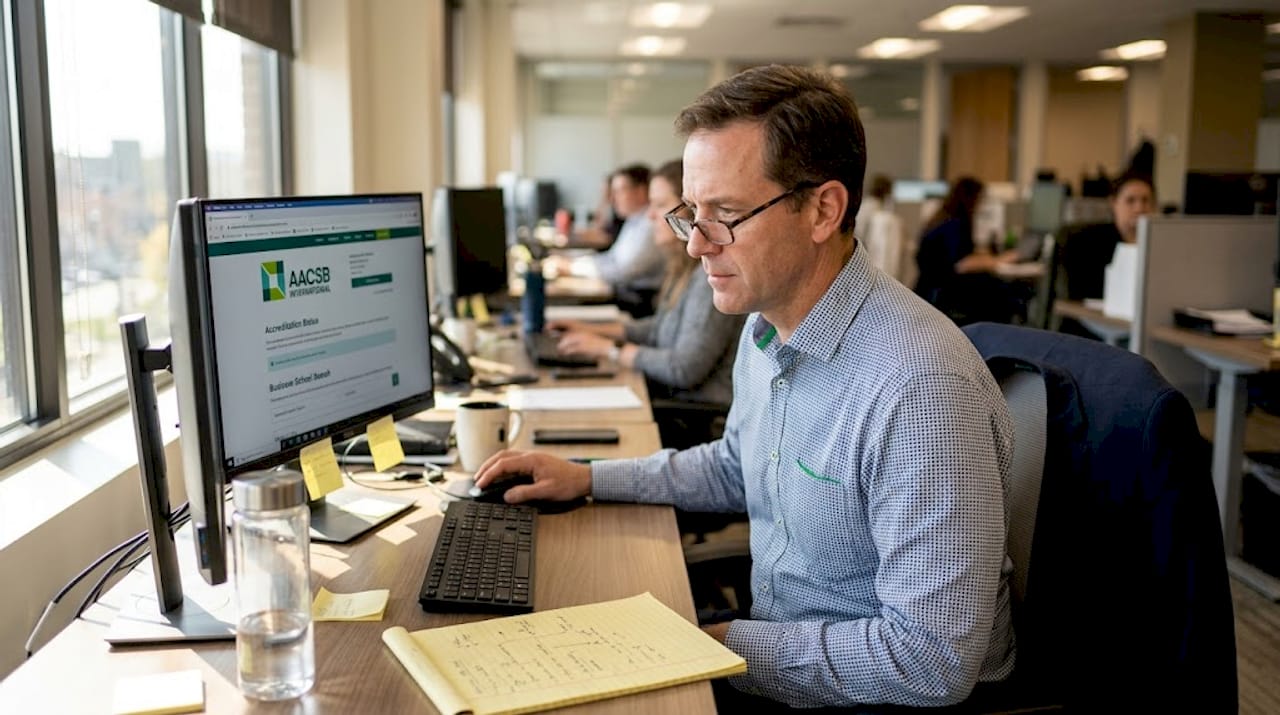
AACSB is the most widely recognized accrediting body for business schools globally. Others include AMBA (Association of MBAs) and EQUIS (European Quality Improvement System). Programs accredited by any of these bodies have been independently audited. That matters enormously when your degree needs to be recognized by an employer in London, Singapore, or Dubai.
Interesting trend: master’s specialist enrollment is growing at 11% while generalist MBA enrollment is declining slightly, according to AACSB’s 2025 State of Business Education report. Professionals are choosing focused, credentialed programs over broad degrees, and online flexible formats are driving much of this growth.
Here is a checklist you can use to verify any program before you apply:
- Confirm the accrediting body and search its official public registry
- Check whether the degree is listed on your home country’s national qualifications framework
- Look at graduate employment rates, not just marketing headlines
- Verify that faculty hold relevant academic or professional credentials
- Review the program’s partnerships with employers or professional bodies like CPA, ACCA, or CIMA
One detail many applicants miss: accreditation applies to the institution OR the specific program. A university can be nationally accredited while a specific MBA program within it holds no additional credential. Always verify at the program level.
Pro Tip: Use the AACSB’s public business school finder tool and cross-check with your country’s national qualifications register. If a program does not appear in either, ask the admissions team for written documentation before you pay any deposit.
Understanding why accreditation matters is often the single most important step international students skip, especially when comparing programs across different countries and systems.
Challenges and the future: What to watch for in online study
Even the best systems face challenges. Here is what savvy students should know now and for the future.
The most significant barrier to online education globally is not motivation. It is access. Reliable high-speed internet and a capable device are non-negotiables for any 2026 online program, yet these remain out of reach for millions of potential students in developing regions. Digital divides exacerbate existing inequities, and AI over-dependence can erode critical thinking if programs are not designed thoughtfully. Low course completion rates remain a persistent challenge, particularly in self-paced formats without cohort accountability.
The fix is not complicated but it requires intentional program design:
- Cohort-based scheduling creates peer accountability that self-paced formats cannot replicate
- Weekly live touchpoints with instructors reduce isolation and improve completion
- Discussion-based assessments force critical reasoning rather than passive consumption
- Mentorship programs connect students with working professionals in relevant industries
“Online programs that treat learners as passive consumers will continue to see high dropout rates. The future belongs to programs that build learning communities, not just content libraries.” — OECD Digital Education Outlook 2026
Looking ahead, program selectivity is increasing. Schools are learning that higher standards at admission correlate with stronger outcomes and better institutional reputation. This is good news for serious candidates who invest time in choosing well. For those weighing their options on accounting online flexibility, the trend toward structured, cohort-based online programs means quality is rising across the board.
The human-AI balance will define the best online programs of the next decade. Schools that use AI for efficiency while protecting time for debate, collaboration, and real-world case work will produce the graduates employers actually want to hire.
Why the future of online learning is more personal—and harder—than most expect
Here is the uncomfortable reality that most program websites will not tell you. Flexibility does not automatically equal success. In fact, the freedom that makes online learning appealing is the same factor that causes many capable students to fall behind.
Passive learning is easy online. Watching a recorded lecture while checking your email feels like studying. It is not. The students who build genuinely marketable skills from online programs are those who actively construct accountability structures: study groups, self-imposed deadlines, and regular interaction with instructors. They treat the degree like a professional commitment, not a convenience.
We have watched this pattern play out repeatedly. The hardest part of an online vs. on-campus MBA is not the coursework. It is building the discipline to engage deeply when no one is physically watching. AI helps. Cohort design helps. But ultimately, your outcomes reflect your choices inside the platform, not just the platform itself.
Future-proof skills in management and accounting, things like stakeholder communication, ethical judgment, and financial interpretation under uncertainty, come from wrestling with difficult problems alongside other humans. Use every live session, every group project, and every discussion forum as if your career depends on it. Because it does.
Explore top flexible online degrees for your global career
SeekStudy offers accredited, fast-track online programs in management and accounting designed specifically for working professionals and international students who cannot afford to slow down. Whether you are considering an online Executive MBA or looking to study accounting online with a credential recognized across the UK, Singapore, and beyond, SeekStudy’s programs are built around your real-world schedule.
Our one-year MBA, two-year bachelor’s in business management, and university preparation courses are designed for people who want results without relocating. If you want a clear overview before deciding, our guide to online MBA breaks down everything from costs to career outcomes. The right program is closer than you think.
Frequently asked questions
Are online management and accounting degrees in 2026 recognized internationally?
Yes, accredited online degrees with AACSB or equivalent recognition are widely accepted by global employers and institutions. Always verify accreditation at the program level, not just the university level.
How long does it take to complete an online program in management or accounting?
Many reputable programs offer 1- to 2-year tracks with flexible asynchronous options built for working professionals. Specific timelines vary based on full-time versus part-time enrollment.
What technology will I need for a 2026 online business degree?
A reliable internet connection, a laptop or tablet, and comfort using video platforms and AI-based learning tools are essential. Digital access gaps remain a real barrier for students in regions with inconsistent connectivity.
Is AI helpful or a risk in online learning?
AI provides real-time feedback and personalized pacing, but over-dependence on AI can weaken metacognitive skills. Programs that balance AI tools with structured human instruction produce the strongest outcomes.
Recommended
- Why Study Management Online: Global Career Benefits
- Study accounting online: flexibility and global career growth
- Difference Between Online and On-Campus MBA: Career Impact
- 7 Key Benefits of Online MBA Programs for Professionals
- Corporate account management: 7 advanced tips for 2026
- How to Manage Swiss Accounting for Global Businesses