

Balancing career ambitions, personal commitments, and education can feel impossible when traditional university programs demand years of full-time attendance. Fast-track UK degree programs abroad offer a solution, allowing you to earn an accredited qualification in half the time through flexible online or blended learning formats. This guide walks you through selecting, enrolling in, and succeeding with these programs in 2026 to accelerate your career without putting life on hold.
Table of Contents
- Understanding UK Degree Accreditation And Recognition
- Prerequisites And Eligibility For Enrollment
- Flexible Study Options For International Students
- Timeline For Completing A UK Degree Abroad
- Cost Considerations For Earning A UK Degree Abroad
- Common Pitfalls And Troubleshooting Fast-Track UK Degrees Abroad
- Expected Outcomes And Career Benefits Of Fast-Track UK Degrees Abroad
- Discover Seekstudy’s Fast-Track UK Degree Programs
Key takeaways
| Point | Details |
|---|---|
| Verify Ofqual accreditation | Confirm programs meet UK standards to ensure global degree recognition and avoid wasted investment. |
| Complete degrees faster | Fast-track bachelor’s finish in 2 years and master’s in 12 months, half the traditional timeline. |
| Choose flexible formats | Fully online or blended international campus options fit around work and personal schedules. |
| Budget comprehensively | Expect £10,000-£18,000 tuition plus travel and technology costs for international study periods. |
| Master time management | Accelerated programs demand disciplined scheduling to succeed without burnout. |
Understanding UK degree accreditation and recognition
Accreditation determines whether your degree will be recognized by employers and institutions worldwide. Ofqual, the UK’s official regulator, sets quality standards for degrees delivered internationally, ensuring programs maintain academic rigor regardless of location. Without proper accreditation, you risk investing time and money into a qualification that holds no weight in the job market.
Before enrolling, verify program credentials through official government databases. Visit the Ofqual website to confirm the awarding body appears on their register of recognized organizations. Cross-reference claims made by education providers with independent sources rather than relying solely on marketing materials.
Research shows that 30% of advertised online UK degrees lack proper accreditation, leaving students with worthless certificates. This statistic underscores why due diligence matters more than glossy brochures or persuasive sales pitches.
Always request official documentation proving Ofqual accreditation status before submitting application fees or committing to a program. Legitimate providers welcome transparency and readily share regulatory approvals.
Unaccredited programs often cost less initially but deliver zero career value. A uk-recognized degrees explained resource can help you understand exactly what to look for when evaluating different providers.
Key verification steps include:
- Check the Ofqual register for the awarding body
- Confirm partnership agreements with recognized UK universities
- Review course syllabi against UK Quality Code standards
- Request proof of graduate employment rates and employer recognition
- Search for independent student reviews beyond provider websites
Prerequisites and eligibility for enrollment
Most fast-track UK degree programs require qualifications equivalent to UK A-levels or high school completion from your home country. Academic transcripts must demonstrate competency in relevant subjects, particularly for specialized fields like business management or accounting.
English proficiency testing is mandatory for non-native speakers. Programs typically require IELTS scores between 6.0 and 7.0, depending on the degree level and institution. These thresholds ensure you can engage with course materials, participate in discussions, and complete assignments effectively.
Some providers offer foundation or preparatory courses to bridge gaps in academic background or language skills. These pre-degree programs typically last 3 to 6 months and smooth the transition into intensive study. While they extend your overall timeline slightly, they significantly improve success rates for students entering from diverse educational systems.
Technical requirements matter as much as academic ones. Reliable high-speed internet, a functional computer or tablet, and basic software proficiency are non-negotiable for online components. Video conferencing tools, learning management systems, and digital collaboration platforms form the backbone of remote education delivery.
Time availability represents the final prerequisite. Fast-track programs compress standard curricula into shorter periods, demanding 15 to 25 hours weekly for coursework, readings, and assignments. Before applying, honestly assess whether your current commitments allow this level of engagement without compromising work performance or personal wellbeing.
Eligibility checklist:
- Academic credentials equivalent to UK qualifications
- English test scores meeting minimum thresholds
- Technology setup supporting online learning platforms
- Weekly time availability matching program intensity
- Financial resources covering tuition and related expenses
Understanding how to apply for uk degree online 2026 processes helps streamline preparation and avoid common application mistakes.
Flexible study options for international students
Flexible delivery formats make UK degrees accessible to working professionals and students unable to relocate. Asynchronous online courses allow study scheduling around existing commitments, with 70 to 80% of content available on-demand rather than at fixed times.

Fully online programs eliminate geographic barriers entirely. You access lectures, submit assignments, and interact with faculty from anywhere with internet connectivity. This format maximizes convenience but requires self-discipline to maintain momentum without physical campus structure.
Blended learning combines online modules with short intensive periods at international campuses. You might complete theoretical coursework remotely, then attend 2-week immersive sessions in Singapore or the UK for hands-on workshops, networking events, and cultural experiences. These hybrid models balance flexibility with the tangible benefits of face-to-face interaction.
Cultural exposure through international study periods enhances employability beyond degree credentials alone. Employers value candidates who demonstrate adaptability, cross-cultural communication skills, and global perspectives gained through diverse educational environments. Blended formats deliver these soft skills while maintaining the convenience of remote learning for core content.
Working professionals particularly benefit from formats that respect career obligations. Evening and weekend class options, recorded lectures for review, and flexible assignment deadlines accommodate unpredictable work schedules. You progress toward your degree without sacrificing income or professional responsibilities.
Format comparison:
- Fully online: maximum flexibility, no travel required, self-paced progression
- Blended: combines remote convenience with campus networking and cultural immersion
- Synchronous sessions: real-time interaction with faculty and peers at scheduled times
- Asynchronous modules: study whenever suits your schedule within assignment deadlines
Pro Tip: Choose blended programs if you value networking opportunities and can manage short international trips. Select fully online options when geographic or schedule constraints make travel impractical.
Explore why study management online to understand specific advantages for business-focused degrees delivered remotely.
Timeline for completing a UK degree abroad
Fast-track bachelor’s degrees typically finish in 24 months compared to traditional 3 to 4 year programs. This acceleration comes from year-round study schedules, concentrated modules, and elimination of extended holiday breaks. You cover the same curriculum depth in compressed timeframes through intensive engagement.
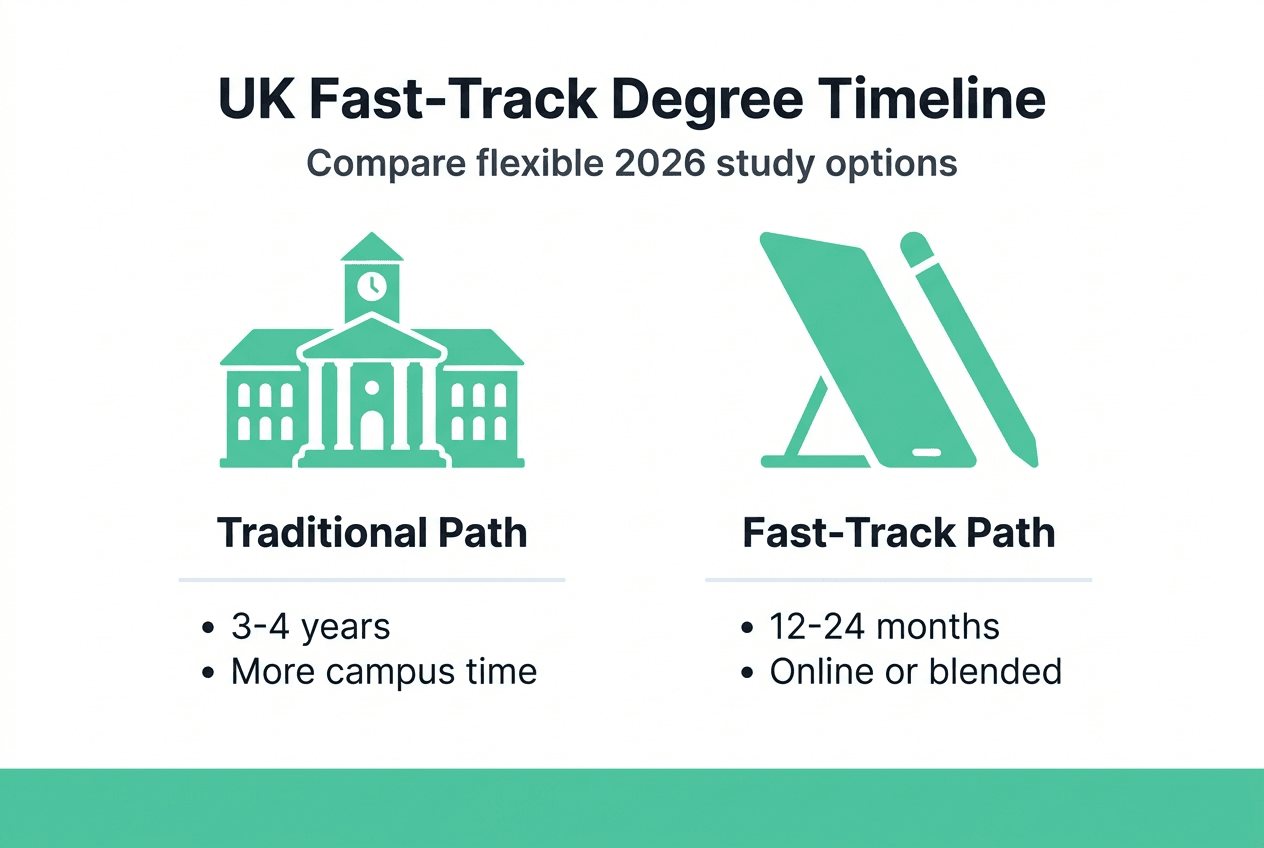
Master’s programs condense even further, with many completing in 12 months versus conventional 18 to 24 month durations. Accelerated master’s degrees suit professionals seeking quick credential upgrades without extended career interruptions. The shorter timeline also reduces total costs despite potentially higher per-month tuition rates.
| Degree Level | Traditional Duration | Fast-Track Duration | Time Saved |
|---|---|---|---|
| Bachelor’s | 3-4 years | 2 years | 1-2 years |
| Master’s | 18-24 months | 12 months | 6-12 months |
Acceleration requires commitment but delivers career advancement opportunities sooner. You enter or progress in the job market with updated qualifications while peers in traditional programs remain mid-study. This timing advantage can translate directly into salary increases, promotions, or career pivots.
Intensive study demands excellent time management and consistent effort. Unlike traditional semesters with built-in breaks, fast-track programs maintain momentum through shorter gaps between modules. You must sustain focus and energy across compressed timelines without extended recovery periods.
Realistic planning involves mapping course loads against work and personal calendars. Identify periods when professional demands peak and adjust study intensity accordingly. Communicate with employers about education goals to negotiate flexibility during high-intensity academic periods.
Pro Tip: Start fast-track programs during relatively stable career periods rather than amid major projects or life transitions. Initial momentum proves crucial for long-term success.
Cost considerations for earning a UK degree abroad
Fast-track UK degree programs abroad typically range from £10,000 to £18,000 for complete qualifications, substantially less than £20,000 to £30,000 for on-campus UK study. Lower costs stem from reduced facility overhead, no accommodation expenses for providers, and streamlined delivery models.
Tuition covers core educational services but additional expenses require budgeting. Technology investments include reliable computers, software subscriptions, and backup internet solutions. Blended programs add travel costs for international study periods, encompassing flights, accommodation, meals, and local transportation during campus visits.
Financial planning should account for currency fluctuations when paying fees in British pounds while earning income in other currencies. Exchange rate movements can impact total costs by 10 to 15% over multi-year programs. Consider forward contracts or regular small payments to mitigate volatility.
| Cost Component | Fast-Track Abroad | Traditional On-Campus UK |
|---|---|---|
| Tuition | £10,000-£18,000 | £20,000-£30,000 |
| Accommodation | £0-£2,000 (blended only) | £8,000-£12,000 per year |
| Technology | £500-£1,000 | £500-£1,000 |
| Travel | £1,000-£3,000 (blended) | £2,000-£5,000 |
| Living expenses | Home country rates | £12,000-£15,000 per year |
Some providers offer payment plans spreading costs across program duration rather than requiring lump sums upfront. Installment options improve accessibility but may include interest or administrative fees. Compare total costs across different payment structures before committing.
Scholarships and financial aid exist for online and blended programs, though less commonly than traditional on-campus offerings. Research employer tuition assistance programs, professional association grants, and provider-specific merit scholarships. Even partial funding significantly reduces out-of-pocket expenses.
Budgeting tips:
- Build a 10% contingency for unexpected costs like supplementary materials or exam fees
- Research tax deductions for education expenses in your home country
- Compare all-inclusive program fees against itemized pricing structures
- Factor in opportunity costs of study time versus potential earnings from additional work
Common pitfalls and troubleshooting fast-track UK degrees abroad
Choosing unaccredited programs represents the costliest mistake. Students invest thousands of pounds and hundreds of hours only to discover employers don’t recognize their qualifications. Always verify Ofqual registration before submitting applications or payments.
Underestimating workload intensity causes 25% of students to drop out from accelerated programs. Fast-track schedules demand significantly more weekly hours than traditional pacing. Honest self-assessment of available time and energy prevents enrollment in programs you cannot realistically complete.
Ignoring English language requirements leads to application rejections or academic struggles. Complete IELTS or equivalent testing well before application deadlines. If scores fall short, invest in language preparation courses rather than attempting programs without adequate proficiency.
Poor financial planning creates mid-program crises when unexpected costs arise. Budget comprehensively for all expenses including technology upgrades, travel for blended components, exam fees, and dissertation costs. Maintain emergency funds covering at least one semester’s expenses.
Fast-track programs reward preparation and punish assumptions. Verify every detail, plan conservatively, and build buffers for inevitable surprises. Success comes from realistic expectations managed proactively.
Success strategies:
- Use digital calendars with reminders for assignment deadlines and exam dates
- Join student communities for peer support and shared problem solving
- Schedule regular check-ins with academic advisors before issues become crises
- Establish dedicated study spaces minimizing distractions and signaling focus time
- Build weekly schedules blocking specific hours for coursework like professional meetings
Technical difficulties disrupt online learning when devices fail or internet connectivity drops. Maintain backup solutions including alternative internet sources, cloud storage for coursework, and spare devices. Contact IT support immediately when problems arise rather than hoping issues resolve independently.
Expected outcomes and career benefits of fast-track UK degrees abroad
Graduates receive officially accredited degrees recognized globally by employers and institutions. UK qualifications carry international prestige, opening doors in competitive job markets across multiple countries. Ofqual regulation ensures academic standards match traditional on-campus programs despite flexible delivery.
Completion timelines reduce by 50% compared to conventional study, delivering credentials and career advancement opportunities years earlier. This acceleration compounds over professional lifetimes as promotions, salary increases, and opportunities arrive sooner.
Blended programs incorporating international study periods boost employability by approximately 15% through demonstrated cultural adaptability and global networking. Employers value candidates who navigate diverse environments successfully, viewing international experience as proof of flexibility and communication skills.
Graduate satisfaction surveys consistently rate academic rigor and career progression highly for fast-track programs. Alumni report that compressed timelines maintained quality through intensive engagement rather than diluted content. Career services, industry connections, and practical skill development meet or exceed expectations set by traditional programs.
Professionals balancing work and education gain competitive advantages from current industry experience combined with updated theoretical knowledge. Unlike recent graduates entering with degrees but limited practical exposure, working students apply learning immediately in professional contexts, strengthening both academic performance and job effectiveness.
Career outcomes include:
- Qualification for roles requiring specific degree credentials
- Eligibility for promotions previously blocked by education requirements
- Career pivots into new industries or specialized functions
- Salary increases averaging 15 to 25% within two years of completion
- Enhanced professional networks through international cohort connections
Learn more about fast-track degrees career advancement opportunities and specific outcomes for different industries and roles.
Discover Seekstudy’s fast-track UK degree programs
If you’re ready to accelerate your career without relocating or pausing professional commitments, Seekstudy offers Ofqual-accredited fast-track degrees combining online flexibility with international study experiences. Our bachelor in business management completes in just 2 years through structured modules blending remote coursework with immersive periods in Singapore and the UK.
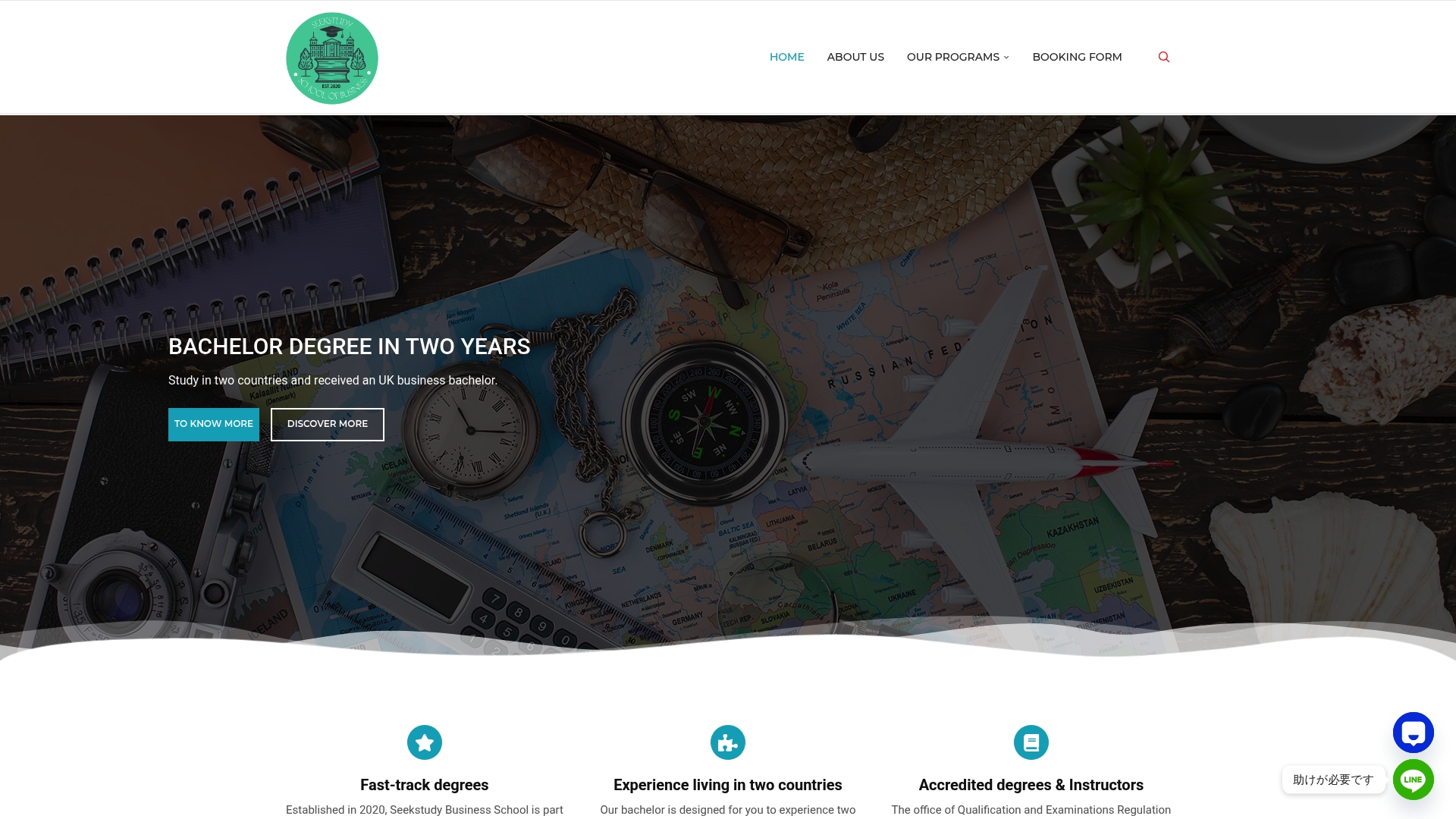
Established in 2020, Seekstudy specializes in accelerated programs designed specifically for working professionals and international students. You benefit from recognized UK qualifications, flexible scheduling, dedicated academic support, and career-focused curricula aligned with global business demands. Our blended format delivers the convenience of online learning with the networking and cultural advantages of international campus experiences.
Explore how fast-track degrees career advancement applies to your specific goals and industry. Ready to start? Learn how to apply for business degree fast track programs and take the first step toward your UK-recognized qualification.
FAQ
Is it possible to earn a fully accredited UK degree without relocating?
Yes, accredited fast-track UK degrees are available through fully online or blended formats allowing you to study from your home country. Programs must carry Ofqual accreditation or equivalent regulatory approval to ensure global recognition. Verify accreditation status independently before enrolling to guarantee your investment delivers recognized qualifications.
What are the typical entry requirements for UK degrees earned abroad?
Most programs require academic credentials equivalent to UK high school completion and IELTS scores between 6.0 and 7.0 for English proficiency. Some specialized degrees or providers may request foundation courses depending on your educational background and country of origin. Technology requirements include reliable internet and functional devices supporting online learning platforms.
How long does it take to complete a fast-track UK degree abroad?
Bachelor’s degrees typically finish in approximately 2 years while master’s programs complete in about 12 months. These accelerated timelines represent roughly half the duration required by conventional on-campus programs. Compression comes from year-round study schedules, intensive modules, and elimination of extended breaks between terms.
Are there cost savings compared to studying on campus in the UK?
Fast-track degrees abroad generally cost between £10,000 and £18,000, substantially less than £20,000 to £30,000 for traditional on-campus UK tuition. However, blended programs require additional budget for international travel and accommodation during campus study periods. Total expenses typically remain lower than full relocation but exceed purely online options.
What common challenges should students expect and how to avoid them?
Poor time management and failure to verify accreditation represent the top causes of dropout and wasted investment. Use digital planning tools, confirm Ofqual registration before applying, and assess your available study hours realistically before enrollment. Build comprehensive budgets including contingencies and establish dedicated study routines treating coursework like professional commitments.