

Many professionals believe executive MBA programs are simply part-time versions of traditional MBAs, missing the distinct value these programs offer for career acceleration. An executive MBA is specifically designed for experienced managers seeking leadership advancement without pausing their careers. In 2026, these programs combine flexible learning formats with international study experiences, creating powerful opportunities for global networking and strategic skill development. This article clarifies what executive MBAs truly offer, how they drive measurable career growth, and why international exposure paired with online accessibility makes them ideal for ambitious professionals ready to elevate their impact.
Table of Contents
- Understanding The Executive MBA: Definition And Career Relevance
- How Executive MBA Programs Support Professionals’ Career Advancement In 2026
- The Growing Role Of International Study And Flexible Formats In Executive MBA Programs
- Choosing The Right Executive MBA Program For Your Professional Goals
- Explore Top Executive MBA Programs With SeekStudy Business School
Key takeaways
| Point | Details |
|---|---|
| Flexible learning formats | Executive MBA programs offer online, hybrid, and on-campus options that accommodate working professionals’ schedules without career interruption. |
| International study advantage | Global immersion experiences provide cross-cultural business insights and expand professional networks across continents. |
| Leadership skill acceleration | Programs focus on strategic management, decision-making frameworks, and executive competencies that drive promotions. |
| Networking multiplier effect | Cohort-based learning connects you with senior professionals globally, creating lasting career opportunities. |
| Career placement impact | Accelerated business degrees boost career placement rates significantly for enrolled professionals. |
Understanding the executive MBA: definition and career relevance
An executive MBA explained is a graduate business degree targeting mid-to-senior level professionals with substantial work experience, typically five to fifteen years. Unlike traditional MBA programs designed for early-career individuals, executive MBAs condense rigorous business education into formats that respect your existing professional commitments. These programs prioritize leadership development, strategic thinking, and practical application over theoretical foundations you’ve likely already mastered through experience.
The distinctive features set executive MBAs apart from conventional graduate business education. Classes typically meet on weekends, evenings, or in intensive modules that allow you to maintain full-time employment. Many programs incorporate online components or fully virtual formats, eliminating geographic barriers. The curriculum emphasizes real-world problem solving, often requiring you to apply concepts directly to your current organization through capstone projects or consulting assignments.
Career relevance drives every aspect of executive MBA design. You gain frameworks for navigating complex business challenges, leading diverse teams, and driving organizational change. The strategic perspective you develop translates immediately into workplace impact, positioning you for C-suite roles, board positions, or entrepreneurial ventures. Your cohort becomes a powerful professional network spanning industries and geographies, opening doors that remain closed to those without these connections.
Common misconceptions cloud understanding of executive MBA value:
- Executive MBAs are not simply part-time versions of traditional programs but distinct experiences tailored for seasoned managers
- The condensed timeline does not mean reduced rigor; intensity increases to match professional-level expectations
- Age and experience requirements ensure cohort quality, creating peer learning opportunities unavailable in traditional settings
- Career outcomes focus on advancement within existing fields rather than career switching, though transitions remain possible
The flexibility executive MBAs provide extends beyond scheduling. You choose specializations aligned with your industry, select international study destinations matching your career goals, and customize capstone projects to solve actual challenges you face. This personalization maximizes return on investment by ensuring every learning hour directly advances your specific professional objectives.
How executive MBA programs support professionals’ career advancement in 2026
Executive MBA programs accelerate global careers by focusing on leadership skills tailored for experienced professionals, creating measurable advancement opportunities. Research shows these programs increase career placement rates and leadership opportunities significantly for enrolled professionals, with many graduates securing promotions within two years of completion. The combination of advanced business knowledge, expanded networks, and enhanced credibility positions you for roles previously out of reach.
Learning outcomes directly correlate with career progression. You master strategic management frameworks that inform high-stakes decisions, develop financial acumen necessary for P&L responsibility, and gain marketing insights that drive revenue growth. Leadership modules teach you to inspire teams, manage organizational politics, and communicate vision effectively. Global business coursework prepares you for international assignments or roles managing cross-border operations, skills increasingly essential as companies expand worldwide.

Peer networking strengthens professional connections in ways traditional education cannot replicate. Your cohort comprises accomplished professionals from diverse industries, creating opportunities for collaboration, mentorship, and business development. Study groups often evolve into lasting professional relationships, with classmates becoming clients, partners, or advisors throughout your career. Alumni networks provide ongoing access to senior leaders who can open doors, offer guidance, or connect you with opportunities matching your ambitions.
Flexibility distinguishes executive MBAs from programs requiring career breaks. You apply new concepts immediately in your current role, demonstrating value to employers while studying. This real-time application accelerates learning and provides concrete examples for your resume. Many professionals negotiate tuition support from employers who recognize the organizational benefit of upskilling their talent, reducing your financial burden while strengthening your position within the company.
The benefits of online MBA programs extend beyond convenience. Virtual formats connect you with international classmates, exposing you to diverse business practices and perspectives. Recorded lectures allow you to revisit complex topics, deepening understanding. Digital collaboration tools mirror modern workplace technology, building skills you’ll use daily in remote or hybrid professional environments.
Pro Tip: Leverage alumni networks aggressively after graduation by attending regional events, joining industry-specific groups, and offering value to fellow graduates before asking for assistance, creating reciprocal relationships that amplify career impact long-term.
The growing role of international study and flexible formats in executive MBA programs
International study experiences within EMBA programs can boost careers by 30% through global networking and cross-cultural insights that transform how you approach business challenges. These immersion experiences take you beyond theoretical understanding of international markets into practical engagement with different business cultures, regulatory environments, and consumer behaviors. You build relationships with professionals and faculty across continents, creating networks that support global career moves or international business development.
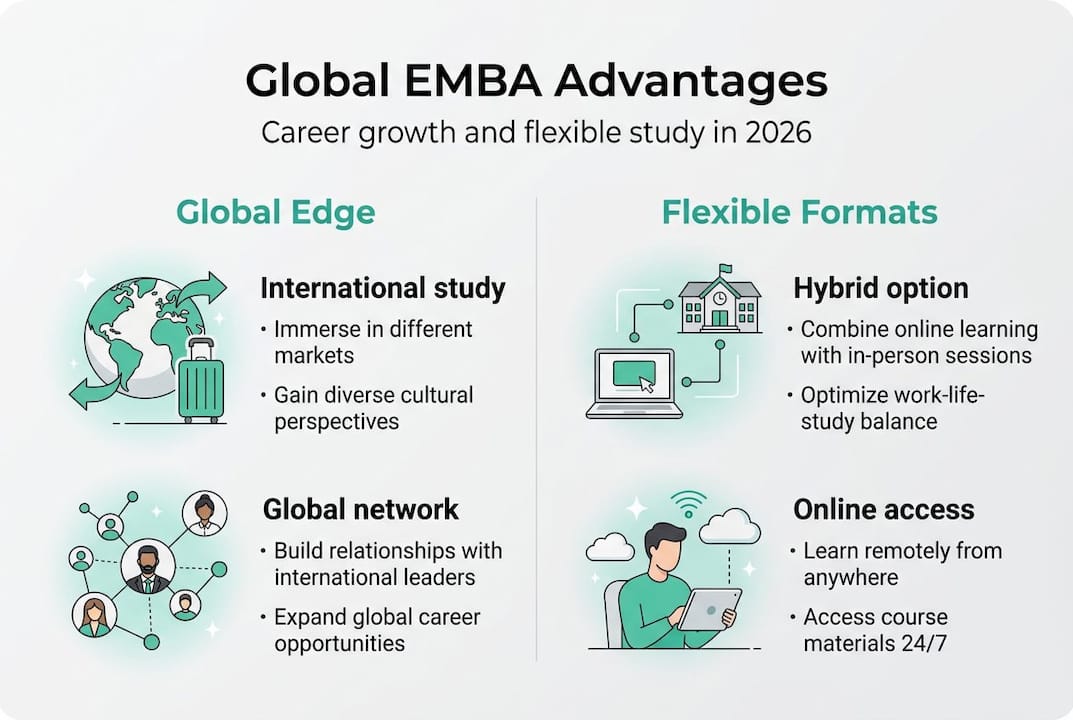
Hybrid and online formats provide the flexibility necessary for working professionals to pursue advanced education without sacrificing career momentum. You access world-class faculty and diverse cohorts regardless of your location, eliminating the need for relocation or extended absences from work. Asynchronous components let you engage with coursework during hours that fit your schedule, while synchronous sessions create real-time interaction and accountability.
Different delivery modes offer distinct advantages based on your circumstances and learning preferences:
| Format | Key Benefits | Considerations |
|---|---|---|
| On-campus | Intensive networking, immersive experience, direct faculty access | Requires travel, time away from work, higher total cost |
| Online | Maximum flexibility, lower cost, no relocation, global access | Requires self-discipline, limited face-to-face networking |
| Hybrid | Balances flexibility with in-person connection, international modules | Moderate travel required, scheduling complexity |
| International study | Global perspective, cross-cultural skills, expanded networks | Additional cost, passport/visa requirements, time commitment |
Flexible scheduling maintains career continuity while you develop new capabilities. Weekend intensives let you focus deeply on coursework without weekday disruptions. Modular formats alternate study periods with work periods, allowing you to apply concepts immediately then return for advanced topics. Employer-sponsored programs often coordinate with your organization to minimize conflicts between academic and professional obligations.
Key advantages of each delivery mode include:
- On-campus programs create powerful cohort bonds through shared residential experiences and spontaneous collaboration
- Online formats eliminate geographic constraints, connecting you with truly global classmates and reducing total program cost
- Hybrid models provide in-person networking during intensive modules while maintaining flexibility between residencies
- International study components expose you to emerging markets, alternative business models, and diverse leadership approaches
- Asynchronous learning accommodates demanding travel schedules or unpredictable work hours common in senior roles
Pro Tip: Choose programs with diverse international partners spanning multiple continents for broader business perspectives, ensuring exposure to both developed and emerging markets that reflect the global economy you’ll navigate throughout your career.
The types of executive MBA programs available in 2026 reflect evolving professional needs, with approximately 60% now offering hybrid formats that combine online convenience with strategic in-person intensives. This variety ensures you can find a program matching your learning style, career goals, and personal circumstances without compromising educational quality or networking opportunities.
Choosing the right executive MBA program for your professional goals
Choosing EMBA programs aligned with career goals and learning style maximizes return on investment and career impact, requiring systematic evaluation of program features against your specific objectives. A structured approach helps you navigate the overwhelming number of options and identify programs offering the greatest value for your unique situation.
Follow this stepwise evaluation process:
- Define your career objectives clearly, specifying target roles, industries, or entrepreneurial goals you aim to achieve within five years post-graduation.
- Assess your learning preferences, determining whether you thrive in structured classroom settings or prefer self-directed online study with periodic collaboration.
- Evaluate time availability realistically, accounting for work demands, family commitments, and travel requirements to ensure program completion remains feasible.
- Research program specializations, identifying curricula that align with your industry or functional area while offering breadth for career pivots.
- Investigate alumni outcomes, examining career trajectories of recent graduates to gauge whether the program delivers on advancement promises.
- Calculate total investment including tuition, travel, materials, and opportunity costs, then compare against expected salary increases and career benefits.
Important criteria for program selection include:
- Accreditation from recognized bodies like AACSB, EQUIS, or AMBA ensures quality and employer recognition of your degree
- Alumni success rates in securing promotions, board positions, or entrepreneurial funding demonstrate program effectiveness
- Flexibility in scheduling, format, and pace accommodates your professional obligations without forcing career sacrifices
- International opportunities through study abroad modules, global consulting projects, or diverse cohort composition
- Faculty credentials combining academic expertise with practical business experience relevant to your industry
- Career services offering coaching, recruitment access, and ongoing alumni support beyond graduation
Time commitment versus career benefits requires honest assessment. Executive MBAs typically demand 15 to 25 hours weekly including class time, assignments, and group projects. This investment spans 18 to 24 months for most programs, though accelerated options compress timelines further. Weigh this against the benefits of fast track MBA programs that reduce time to degree while maintaining rigor, allowing faster career advancement.
Accelerated and fast-track options suit busy professionals seeking rapid skill development and credential completion. These programs intensify coursework, require greater weekly commitment, but deliver degrees in 12 to 18 months. You gain immediate applicability of skills while market conditions remain favorable, and reduced total program duration lowers opportunity costs despite increased intensity.
Top questions to ask admissions representatives or program directors:
- What percentage of students complete the program on the standard timeline versus requiring extensions?
- How does the curriculum balance foundational business knowledge with advanced strategic topics for experienced professionals?
- What support systems exist for students managing program demands alongside full-time careers and personal responsibilities?
- Can you provide specific examples of recent alumni who achieved career outcomes similar to my goals?
- What opportunities exist for customizing the program through electives, specializations, or independent study projects?
- How does the program facilitate ongoing networking and professional development after graduation?
The online MBA guide for professionals provides detailed frameworks for evaluating virtual and hybrid programs, helping you assess technology platforms, synchronous versus asynchronous components, and strategies for building relationships in digital learning environments.
Explore top executive MBA programs with SeekStudy Business School
Ready to transform your career trajectory with an executive MBA designed for ambitious professionals like you? SeekStudy Business School offers programs combining flexible learning formats, international study experiences, and powerful networking opportunities that accelerate your path to senior leadership. Our online and hybrid executive MBA options let you earn a UK-recognized degree while maintaining your career momentum, with specialized tracks in management and accounting that align with market demand.
Our executive MBA programs feature strategic partnerships across the UK, Hong Kong, Singapore, and Australia, providing authentic international study experience that builds your global business acumen. You’ll collaborate with accomplished professionals worldwide, gaining perspectives that transform how you approach complex challenges. Dedicated career services support your advancement goals through personalized coaching, recruitment connections, and alumni networking events that open doors throughout your career. Our accelerated format respects your time while delivering the rigorous education employers value, positioning you for the promotions and opportunities you’ve earned. Contact our advisors today to explore how our programs align with your specific career goals and learning preferences.
FAQ
What is the main difference between an executive MBA and a traditional MBA?
The executive MBA explained targets experienced professionals with typically five to fifteen years of work experience, while traditional MBAs often enroll early-career students with limited professional backgrounds. Executive programs use flexible schedules like weekend classes or online formats that allow you to continue working full-time, whereas traditional programs usually require daytime attendance. The curriculum emphasizes leadership application and strategic decision-making rather than foundational business concepts, reflecting the advanced experience level of participants.
How does international study within an executive MBA program enhance my career?
International study experiences in EMBA programs can boost careers by 30% through expanded global networks and cross-cultural business insights that distinguish you from peers. You gain firsthand exposure to different regulatory environments, consumer behaviors, and management approaches that prepare you for multinational leadership roles. The relationships you build with international classmates and faculty create opportunities for global career moves, cross-border partnerships, or market expansion initiatives that drive organizational growth.
Can working professionals complete an executive MBA without quitting their jobs?
Absolutely. Most EMBA programs offer flexible online or hybrid schedules tailored specifically for working professionals, with approximately 60% now providing hybrid formats in 2026. Classes meet during evenings, weekends, or intensive modules that minimize disruption to your career. Online components allow you to complete coursework during hours that fit your schedule, while employers often support your participation because they benefit from your immediate application of new skills. The program design assumes you’ll maintain full-time employment throughout, with assignments structured to enhance rather than conflict with your professional responsibilities.
How long does it typically take to complete an executive MBA program?
Most executive MBA program types require 18 to 24 months for completion when following the standard schedule, though accelerated options compress this timeline to 12 to 18 months. The duration depends on program structure, your chosen format, and whether you pursue specializations or international study modules. Part-time pacing accommodates demanding careers, while intensive formats suit professionals seeking faster credential completion. Your specific timeline will reflect the balance you strike between program rigor, career demands, and personal commitments.