

TL;DR:
- International students must meet specific academic and English language requirements to apply.
- Fast-track UK degrees can be completed in 4 to 6 weeks with proper preparation.
- Choosing the right program involves assessing accreditation, curriculum fit, and career support.
Getting into a UK university as an international student can feel like solving a puzzle with missing pieces. You’re researching programs, decoding entry requirements, comparing institutions, and trying to figure out if a fast-track degree in Management or Accounting is even right for you, all at once. The good news is that the process is far more manageable when you break it into clear stages. This guide walks you through every step, from understanding what UK universities expect to budgeting for your studies, whether you plan to study on campus, online, or through a hybrid model that combines the best of both worlds.
Table of Contents
- Understand the requirements for UK universities
- Step-by-step: The UK university application process
- Choosing the best program and institution for your goals
- Preparing financially and adjusting to UK study life
- Why fast-track degrees in the UK are redefining the global study journey
- Accelerate your pathway to a UK Management or Accounting degree
- Frequently asked questions
Key Takeaways
| Point | Details |
|---|---|
| Know your requirements | Check academic, language, and program prerequisites carefully before applying. |
| Streamline your application | Prepare all documents early and apply via the appropriate online platform to save time. |
| Choose the right path | Evaluate UK programs in Management and Accounting for their fit with your career goals and flexibility. |
| Plan your finances | Budget for tuition, living expenses, and possible financial aid to avoid surprises. |
| Leverage fast-track options | Accelerated and online degrees can help you graduate sooner and launch your career. |
Understand the requirements for UK universities
Before you fill out a single form, you need to know exactly what UK universities are looking for. UK universities have detailed entry requirements for international applicants, covering everything from academic credentials to English language proficiency. Getting this wrong at the start can delay your application by months.
For most undergraduate programs in Management and Accounting, you’ll need proof of completed secondary education equivalent to UK A-levels. Many fast-track programs also accept students with relevant work experience, which opens the door for adult learners and career changers. The fast-track degree requirements vary by institution, so always check the specific program page before assuming you qualify.
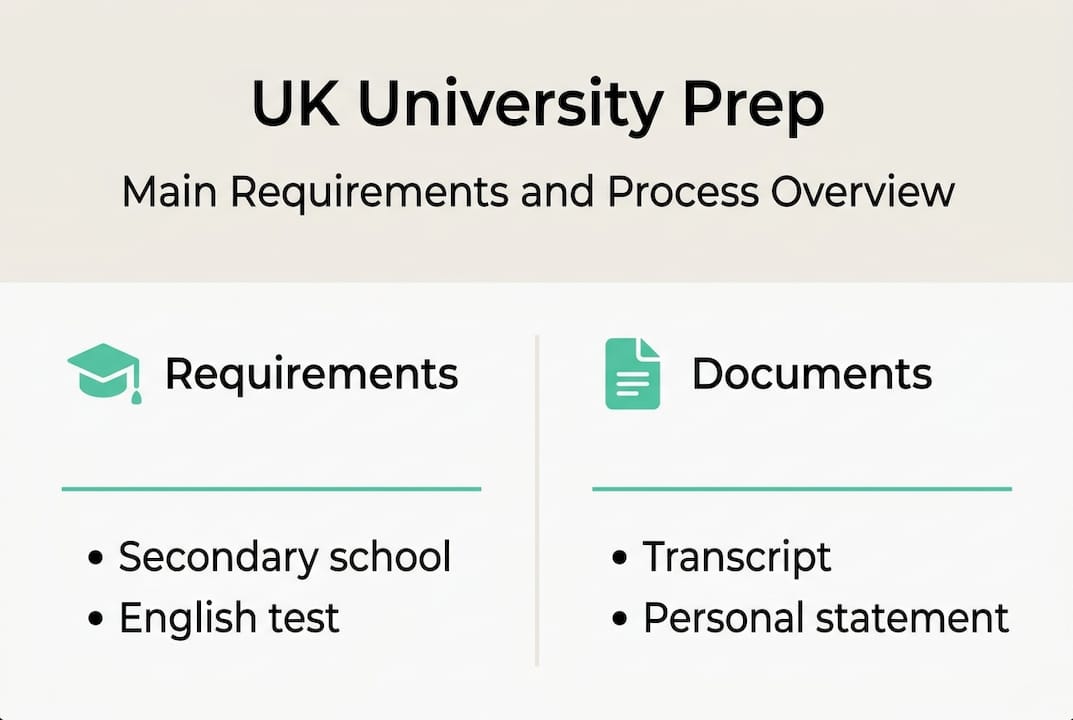
English language proficiency is non-negotiable. Most universities accept IELTS scores of 6.0 to 6.5 for undergraduate entry, though some programs require higher. TOEFL is also widely accepted. If your score falls short, foundation or pre-sessional English courses can bridge the gap before your main program starts.
Standard document checklist for international applicants:
- Certified copies of academic transcripts
- Valid passport (with at least 6 months remaining)
- English language test results (IELTS, TOEFL, or equivalent)
- Two academic or professional reference letters
- Personal statement (500 to 1,000 words)
- Proof of financial support or sponsorship
- UKCISA entry requirements also outline visa-related documentation
| Requirement | Management programs | Accounting programs |
|---|---|---|
| Secondary education | Required | Required |
| IELTS minimum | 6.0 | 6.0 to 6.5 |
| Work experience | Preferred (fast-track) | Preferred (fast-track) |
| Math proficiency | Recommended | Often required |
| Personal statement | Required | Required |
For Accounting tracks specifically, some institutions expect demonstrated numeracy skills or prior coursework in mathematics or economics. Management programs tend to be more flexible, valuing leadership examples and communication skills in your personal statement.
Pro Tip: Write your personal statement before gathering your documents. It forces you to clarify your goals, and those goals will guide which programs and institutions you target. A strong personal statement can compensate for a slightly lower GPA in competitive fast-track programs.
Students applying to UK-recognized degrees through international partner institutions should also confirm that their home country’s qualifications are accepted. Some programs use credit recognition frameworks to assess non-UK transcripts.
Step-by-step: The UK university application process
With your requirements in hand, it’s time to tackle the application process itself. The good news is that applying for a UK degree online has become significantly more streamlined, especially for fast-track programs, with some institutions completing the full cycle in 4 to 6 weeks.
Here’s how the process typically unfolds:
- Research and shortlist programs. Identify 3 to 5 programs that match your academic background, career goals, and budget. Note each institution’s specific deadlines and entry requirements.
- Register on UCAS or apply directly. Most traditional undergraduate programs use the UCAS process. However, many fast-track and online programs accept direct applications through the institution’s own portal.
- Prepare and upload your documents. Use your checklist from Section 1. Incomplete applications are the single biggest cause of delays.
- Write and submit your personal statement. Tailor it to the program. Generic statements rarely succeed in competitive Management and Accounting courses.
- Track your application status. UCAS applicants can monitor offers through the UCAS Hub. Direct applicants should check their email and the institution’s student portal regularly.
- Respond to offers promptly. Conditional offers require you to meet specific criteria (like achieving a minimum IELTS score). Unconditional offers mean you’re in. Accept within the stated deadline.
- Complete enrollment and visa steps. Once accepted, you’ll receive a Confirmation of Acceptance for Studies (CAS) number needed for your student visa application.
| Application route | Timeline | Best for |
|---|---|---|
| UCAS (traditional) | 3 to 6 months | Standard undergraduate degrees |
| Direct (fast-track) | 4 to 6 weeks | Accelerated and online programs |
| Partner institution | Varies | International pathway programs |
For the online UK application 2026 cycle, many institutions have extended rolling admissions, meaning you don’t need to wait for a fixed intake date. This is a major advantage for fast-track programs in Management and Accounting.
Pro Tip: Apply to at least one rolling admission program as a backup. Fixed-intake deadlines can be unforgiving, and a rolling option keeps your timeline flexible without compromising on quality.
Choosing the best program and institution for your goals
With applications underway, your next challenge is choosing the right program and institution. This is where many students make costly mistakes, picking a school based on name recognition alone rather than fit.
Choosing the right program and university is critical for future career prospects. Here’s what actually matters when you evaluate your options:
Key factors to assess:
- Accreditation status. Is the degree recognized by Ofqual or an equivalent regulatory body? UK-accredited qualifications carry global weight.
- Program structure. Does the curriculum match your career goals? Management programs often emphasize leadership, strategy, and organizational behavior. Accounting programs go deeper into financial reporting, auditing, and tax law.
- Student support services. Look for dedicated international student advisors, career placement support, and academic tutoring.
- Online and hybrid options. If you can’t relocate, confirm that the program offers a fully online or blended format without compromising on accreditation.
- Graduate employment rates. This is the most honest signal of a program’s real-world value.
Management and Accounting degrees differ more than most students expect. Management gives you breadth, preparing you for roles across industries, from operations to marketing to general leadership. Accounting builds technical depth, leading to roles in audit, finance, and advisory. Neither is inherently better. The right choice depends on whether you want versatility or specialization.
“The best program is not the most prestigious one. It’s the one that aligns your strengths with the career you actually want to build.”
When researching institutions, go beyond rankings. Read student reviews on independent platforms, look at faculty profiles, and check whether the institution has active industry partnerships. Explore UK bachelor’s degree options that combine academic rigor with practical exposure, and consider whether business management diplomas might serve as a stepping stone if you’re not yet ready for a full degree program.
Preparing financially and adjusting to UK study life
Once you’ve chosen your program, the next step is making the transition as smooth and affordable as possible. Living and studying in the UK requires careful financial planning due to variable tuition fees and living expenses that catch many international students off guard.

| Cost category | Campus study (annual) | Online study (annual) |
|---|---|---|
| Tuition (Management) | £10,000 to £18,000 | £5,000 to £10,000 |
| Tuition (Accounting) | £11,000 to £19,000 | £5,500 to £11,000 |
| Housing | £6,000 to £12,000 | Not applicable |
| Food and transport | £3,000 to £5,000 | Varies by country |
| Books and materials | £500 to £1,000 | £200 to £600 |
Scholarships are available but competitive. Look for awards from the British Council, the Chevening Scholarship program, and institution-specific grants for international students. Many fast-track programs also offer early enrollment discounts if you apply before a set date.
Money-saving strategies for international students:
- Open a UK student bank account early to avoid international transaction fees
- Use student discount cards (NUS or TOTUM) for everyday purchases
- Cook at home rather than eating out, especially in London
- Share housing with other students to split costs
- Apply for scholarships at least 6 months before your intended start date
For students studying online from their home country, the benefits of earning a UK degree abroad go beyond cost savings. You keep your existing job, maintain your social network, and avoid visa complications, all while earning a credential that carries international recognition.
Pro Tip: Use the UK living guide from the UK government to estimate realistic monthly costs before you commit to a budget. Many students underestimate transport and social costs by 20 to 30 percent.
Balancing online study with work and family responsibilities is a real challenge. Build a weekly study schedule during your first week, treat it like a fixed work commitment, and communicate your schedule to your household so interruptions are minimized.
Why fast-track degrees in the UK are redefining the global study journey
Here’s what most articles won’t tell you: the stigma around fast-track degrees is fading fast, and for good reason. The assumption that speed means lower quality simply does not hold up when you look at the outcomes. Fast-track programs cut the timeline by removing redundant content and summer gaps, not by skipping rigor.
The real advantage is who these programs serve. Students from nontraditional backgrounds, those who took a gap year, changed careers, or studied part-time, now have a credible, accredited path that fits their reality. Fast-track flexibility is not a compromise. It’s a design choice that prioritizes your time without sacrificing the credential’s value.
Global recruiters are noticing. International study experience increasingly appears as a differentiator in hiring decisions, not just the degree itself. Students who navigate cross-cultural learning environments, manage time zones, and complete rigorous coursework remotely often demonstrate exactly the adaptability that employers want. The international study impact on career trajectories is real and measurable. If you’re on the fence about whether a fast-track or online UK degree is “worth it,” the evidence points clearly in one direction.
Accelerate your pathway to a UK Management or Accounting degree
Ready to put these strategies into action? SeekStudy offers accredited, fast-track Management and Accounting degrees built specifically for international students who want a UK-recognized qualification without the traditional four-year timeline.
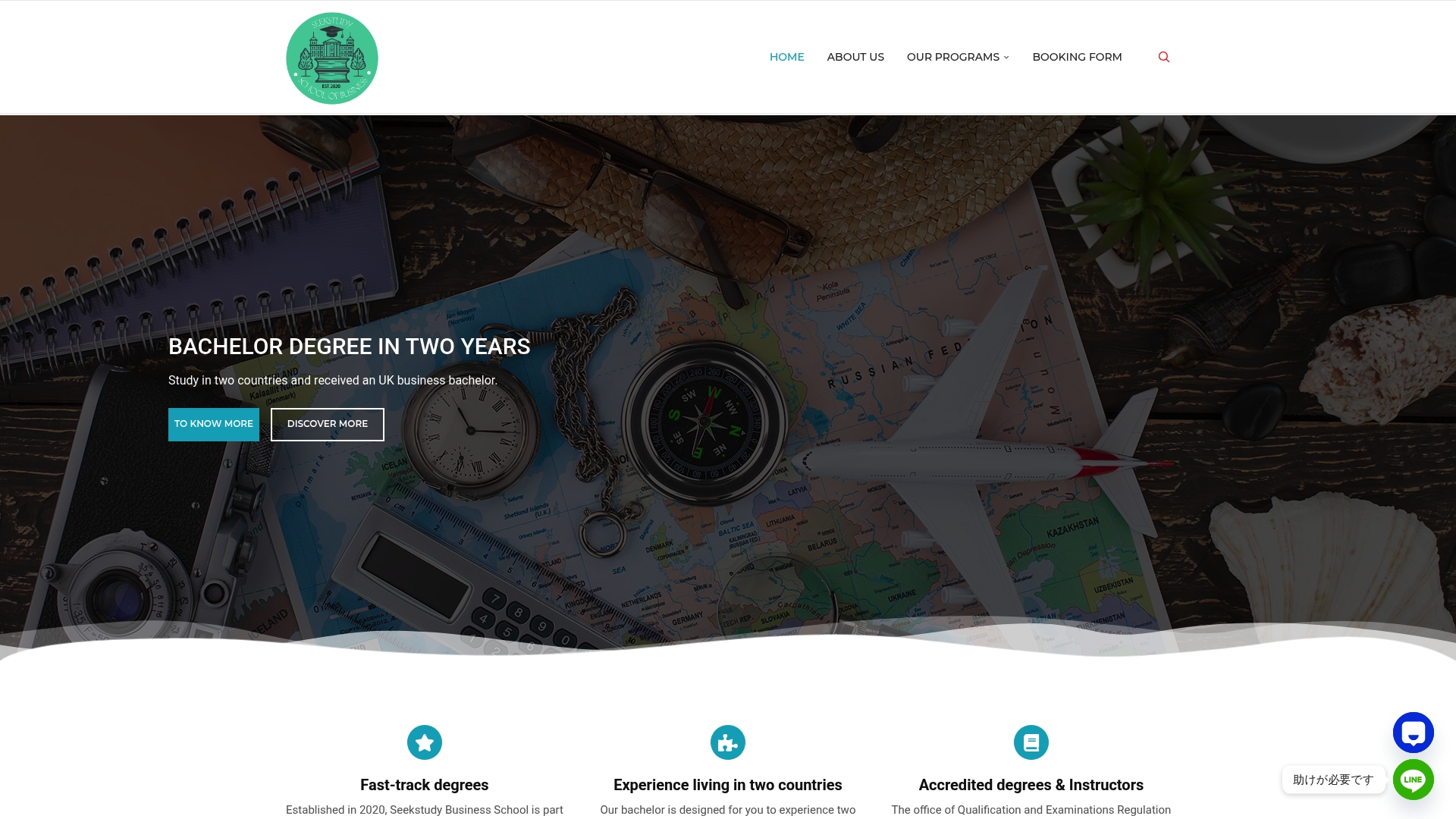
Whether you’re exploring a UK bachelor’s degree, researching accounting in the UK, or ready to start your fast-track business degree application, SeekStudy’s advisors can match you with the right program and guide you through every step. Regulated by Ofqual and partnered with institutions across the UK, Hong Kong, Singapore, and Australia, we make the path to your degree clear, fast, and genuinely achievable.
Frequently asked questions
What are the entry requirements for international students applying to UK universities?
Most UK universities require proof of completed secondary education, English language proficiency (usually IELTS or TOEFL), and relevant documents like a transcript and personal statement. Detailed entry requirements vary by program, so always check the specific course page.
How long does the UK university application process take for fast-track and online options?
For fast-track and online UK degrees, the application process can take as little as 4 to 6 weeks, provided all documents are ready in advance. Traditional UCAS routes typically take 3 to 6 months.
Can I work while studying at a UK university?
Most international students can work part-time during term, but limits and conditions depend on visa status and course type. The UK government’s student work rules outline exactly what’s permitted under each visa category.
What are the advantages of fast-track Management and Accounting programs in the UK?
These programs help you graduate sooner and enter the global workforce with UK-recognized qualifications, lending a real career edge over peers who take the traditional route.
How should I budget for tuition and living costs when preparing for UK university study?
Factor in tuition fees, housing, food, travel, and personal expenses for both campus and online options. Use school guidance and official UK cost estimates to build a realistic monthly budget before you commit.