

Juggling a demanding career while dreaming of rapid advancement can feel impossible for many professionals. The search for efficient academic pathways often leads motivated individuals to explore fast-track management degrees, which promise competitive qualifications without the prolonged timelines of traditional programs. Understanding what truly sets these intensive programs apart—and clearing up common misconceptions—empowers international candidates to make informed decisions that support both career growth and day-to-day responsibilities.
Table of Contents
- Defining Fast-Track Degrees And Misconceptions
- Types Of Fast-Track Management Programs
- Online Versus In-Person Accelerated Study
- Admission Criteria And Accreditation Standards
- Career Impact And Advancement Opportunities
- Potential Drawbacks And Risk Management
Key Takeaways
| Point | Details |
|---|---|
| Fast-Track Degrees Offer Efficiency | These programs condense traditional learning timelines, enabling quicker degree completion. |
| Rigorous Commitment Required | Faster does not mean easier; students must be prepared for increased workloads and higher academic expectations. |
| Strategic Career Advancement | Completing a fast-track degree can enhance professional credibility and career progression opportunities. |
| Consider Personal Fit | Evaluate your learning style, professional commitments, and stress management capabilities before enrolling. |
Defining Fast-Track Degrees and Misconceptions
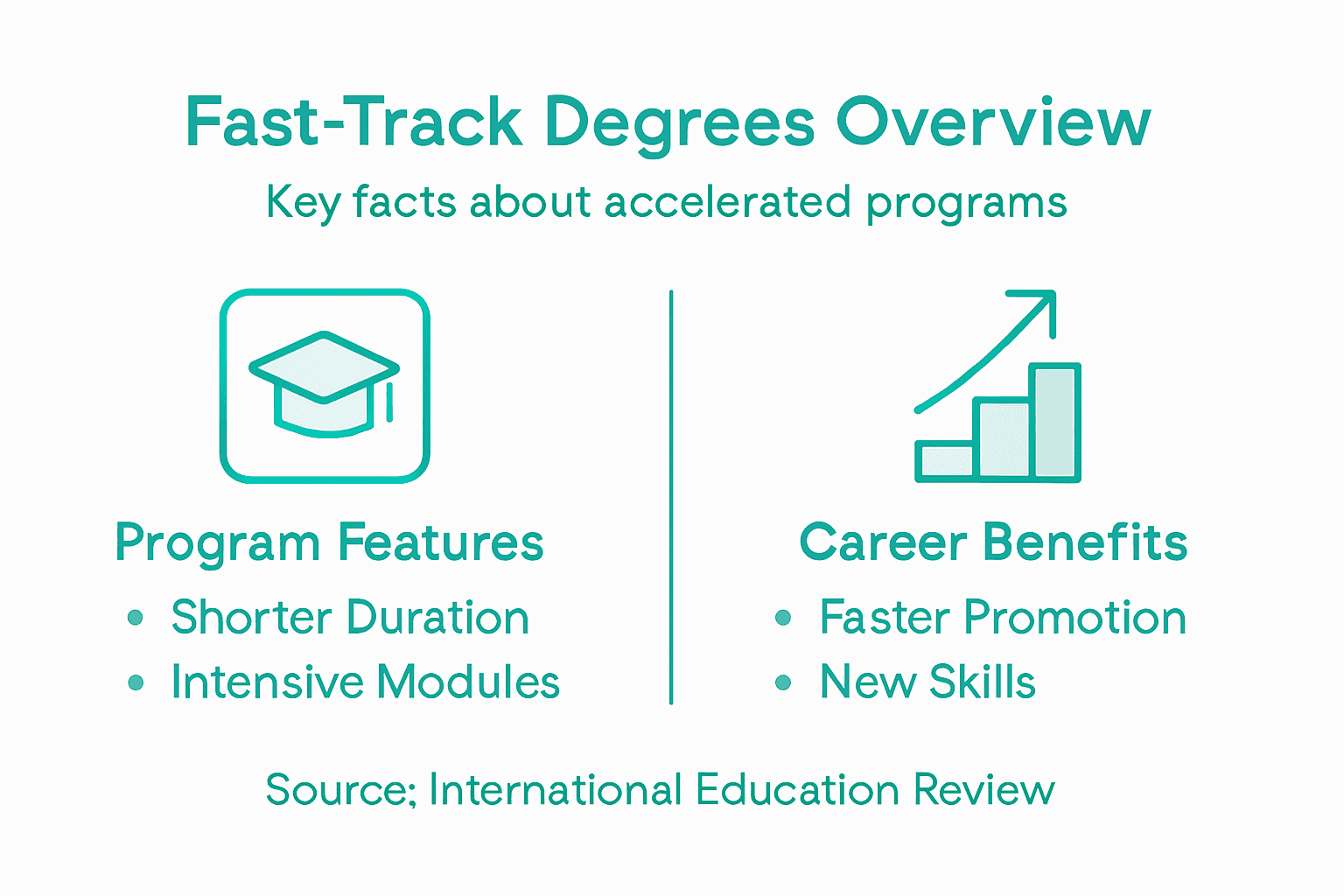
Fast-track degrees represent an innovative educational approach designed to accelerate academic progression for ambitious professionals seeking rapid career advancement. Unlike traditional multi-year degree programs, these specialized pathways compress standard curriculum into shorter timeframes, allowing students to complete qualifications more efficiently. Innovative degree structures challenge conventional learning models by reimagining how academic credentials can be obtained.
At their core, fast-track degrees offer several distinctive characteristics that set them apart from standard academic programs:
- Condensed academic timelines
- Intensive learning modules
- Targeted curriculum design
- Accelerated progression pathways
- Reduced overall educational costs
Students considering these programs must understand that condensed timelines do not equate to compromised academic standards. Accelerated degree programs require students to prepare for more rigorous workloads and potentially compressed academic schedules. The primary misconception is that faster means easier – in reality, these programs demand higher levels of commitment, self-discipline, and academic prowess.
Contrary to popular belief, fast-track degrees are not shortcuts but strategic educational pathways designed for motivated professionals. They represent a targeted approach to learning that prioritizes efficiency without sacrificing educational depth. Employers increasingly recognize these programs as evidence of a candidate’s ability to manage complex challenges, adapt quickly, and demonstrate exceptional time management skills.
Pro tip: Before enrolling in a fast-track program, carefully assess your personal learning style, professional commitments, and capacity for intensive academic work to ensure successful completion.
Types of Fast-Track Management Programs
Fast-track management programs have evolved to meet the dynamic needs of working professionals seeking accelerated academic advancement. Diverse degree formats provide multiple pathways for ambitious managers to enhance their qualifications efficiently and strategically. These programs are designed to accommodate different professional backgrounds, learning styles, and career objectives.
The primary types of fast-track management programs include:
-
Single Degree Accelerated Programs
- Compressed traditional degree timelines
- Intensive coursework schedules
- Typically completed 12-18 months faster than standard programs
-
Dual Degree Management Tracks
- Simultaneous bachelor’s and master’s degree completion
- Integrated curriculum across two qualification levels
- Reduced overall time and tuition investment
-
Executive Management Programs
- Designed for mid-career professionals
- Modular learning structures
- Flexible weekend or evening class formats
Professionals considering these programs must carefully evaluate their personal learning capabilities and professional commitments. Each management fast-track option presents unique advantages and challenges, requiring a strategic approach to academic and career development. The key is selecting a program that aligns precisely with individual career trajectory and learning preferences.
Modern fast-track management programs increasingly leverage technology and innovative pedagogical approaches to deliver comprehensive education. Online components, hybrid learning models, and recognition of professional experience enable students to progress more rapidly while maintaining high academic standards. These programs represent a significant shift from traditional educational paradigms, offering professionals a more agile and targeted pathway to advanced management qualifications.

To help you compare program formats, here’s a summary of fast-track management degree types and their ideal candidates:
| Program Type | Typical Duration Reduction | Best Suited For | Key Distinguishing Factor |
|---|---|---|---|
| Single Degree Accelerated | 12-18 months faster | Early-career professionals | Intensive, focused curriculum |
| Dual Degree Management | 2-3 years faster overall | Highly ambitious learners | Simultaneous dual qualification |
| Executive Management | Modular, varies | Mid-career professionals | Flexible, career-integrated format |
Pro tip: Thoroughly research each program’s accreditation, curriculum structure, and professional recognition before committing to ensure maximum career impact.
Online Versus In-Person Accelerated Study
Accelerated study programs have transformed dramatically with the emergence of digital learning platforms, presenting professionals with diverse options for academic advancement. Comparative learning approaches reveal distinct advantages and challenges for both online and in-person educational formats. Understanding these nuanced differences becomes crucial for professionals strategically planning their educational journey.
Key comparative aspects of online and in-person accelerated study include:
-
Online Learning Advantages
- Maximum scheduling flexibility
- Location-independent study options
- Often more affordable tuition
- Self-paced learning environments
-
In-Person Learning Benefits
- Direct personal interaction
- Immediate networking opportunities
- Structured classroom environment
- Real-time feedback and engagement
Research comparing learning outcomes indicates that educational effectiveness remains consistent across both delivery models. The primary differentiator lies in individual learning preferences, professional constraints, and personal development objectives. Some professionals thrive in digital environments that offer asynchronous learning, while others require the structured accountability of traditional classroom settings.
Technology has significantly bridged previous gaps between online and in-person learning experiences. Advanced digital platforms now incorporate interactive elements like live discussions, collaborative project spaces, and real-time mentor interactions. These technological innovations ensure that online accelerated programs can deliver comparable educational quality and engagement to traditional classroom experiences.
Pro tip: Conduct a comprehensive self-assessment of your learning style, technological comfort, and scheduling constraints before selecting between online and in-person accelerated study formats.
Admission Criteria and Accreditation Standards
Accelerated degree programs demand rigorous admission standards to ensure academic excellence and professional preparedness. International admission requirements have become increasingly comprehensive, evaluating candidates through multifaceted assessment processes that extend beyond traditional academic metrics.
Typical admission criteria for fast-track management programs include:
-
Academic Qualifications
- High school diploma or equivalent
- Minimum grade point average (typically 3.0 or higher)
- Relevant subject prerequisite coursework
- Competitive academic transcripts
-
Language Proficiency Requirements
- TOEFL or IELTS score minimums
- English language competency validation
- Standardized test score submissions
- Optional language assessment interviews
Accreditation standards worldwide ensure that accelerated programs maintain substantial educational integrity. These frameworks validate that condensed degree pathways meet equivalent academic benchmarks as traditional multi-year programs, providing students with globally recognized qualifications that hold substantial professional credibility.
International management programs increasingly emphasize holistic candidate evaluation, considering professional experience, leadership potential, and demonstrated academic capabilities. This comprehensive approach allows institutions to identify motivated professionals who can successfully navigate accelerated learning environments while maintaining high academic performance standards.
Pro tip: Gather all required documentation, including academic transcripts and language proficiency test scores, at least three months before application deadlines to ensure a smooth submission process.
Career Impact and Advancement Opportunities
Accelerated management degrees have transformed traditional career progression pathways, offering professionals unprecedented opportunities for rapid skill development and strategic career positioning. Career acceleration strategies demonstrate how targeted educational investments can dramatically enhance professional trajectories in increasingly competitive global markets.
Key career advancement benefits include:
-
Professional Skill Enhancement
- Rapid industry-relevant knowledge acquisition
- Advanced management competencies
- Strategic thinking development
- Contemporary leadership skills
-
Career Progression Opportunities
- Faster promotion potential
- Increased salary negotiation leverage
- Cross-industry mobility
- Enhanced professional credibility
Academic career acceleration programs provide structured pathways for professionals seeking accelerated career development. These innovative educational models enable participants to compress traditional learning timelines, simultaneously acquiring advanced qualifications and practical industry insights that distinguish them in competitive job markets.
Modern employers increasingly value candidates demonstrating adaptability, continuous learning, and strategic skill development. Fast-track management degrees signal a candidate’s commitment to professional growth, showcasing an ability to manage complex challenges efficiently and navigate rapidly evolving business landscapes. By condensing educational experiences without compromising academic rigor, these programs create powerful professional differentiation mechanisms.
Pro tip: Strategically align your fast-track degree curriculum with specific career advancement goals to maximize professional impact and return on educational investment.
Potential Drawbacks and Risk Management
Accelerated degree programs present unique challenges that require careful strategic planning and personal self-awareness. Comprehensive program evaluation reveals several potential risks that professionals must proactively manage to ensure successful educational outcomes.
Key potential drawbacks of fast-track management programs include:
-
Academic Intensity Challenges
- Compressed learning timelines
- Higher psychological stress levels
- Limited personal study flexibility
- Reduced time for comprehensive understanding
-
Professional Performance Risks
- Potential work-study balance disruptions
- Increased mental and physical fatigue
- Risk of incomplete skill mastery
- Reduced networking opportunities
Professionals considering accelerated programs must develop robust personal management strategies to mitigate potential risks. This involves creating structured study schedules, establishing clear boundaries between professional responsibilities and academic commitments, and developing strong stress management techniques. Successful participants typically demonstrate high levels of self-discipline, organizational skills, and emotional resilience.
Employers and educational institutions are increasingly recognizing the unique challenges of fast-track programs, developing support mechanisms to help students navigate these intensive learning environments. Comprehensive student support services, flexible learning options, and transparent communication about program expectations can significantly reduce potential negative outcomes and enhance overall student success rates.
For a quick overview, this table highlights common risks of fast-track degrees and proven strategies to manage them:
| Risk Area | Common Challenge | Mitigation Strategy |
|---|---|---|
| Academic Intensity | High workload, stress | Create detailed study plans |
| Work-Study Balance | Conflicting professional duties | Set boundaries, prioritize commitments |
| Skill Mastery | Compressed learning time | Use supplementary resources |
| Networking | Reduced interaction time | Engage in virtual networking events |
Pro tip: Conduct a thorough personal assessment of your stress management capabilities and time management skills before committing to an accelerated degree program.
Accelerate Your Career with Fast-Track Degrees Designed for Ambitious Professionals
Facing the challenge of balancing a demanding career with the need for advanced qualifications is common among professionals eager to fast-track their career advancement. The article highlights key pain points such as managing intense academic workloads, navigating compressed learning timelines, and maximizing international study opportunities—all while maintaining professional commitments. At Seekstudy, we understand the importance of accelerated and flexible learning tailored to your unique situation.
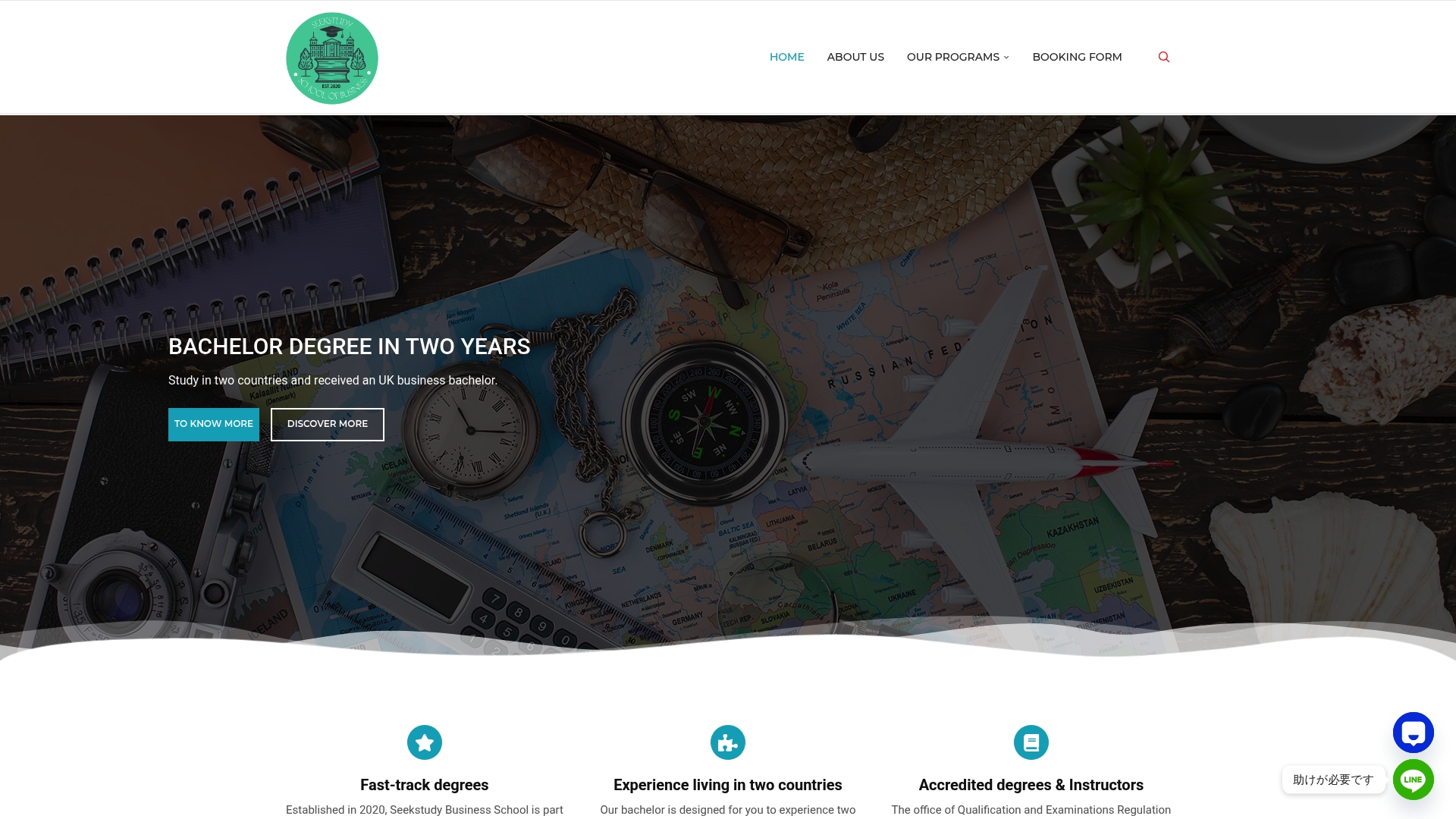
Discover how Seekstudy’s accredited fast-track programs in Management and Accounting can help you achieve your goals without compromising quality or international recognition. Whether you are interested in our two-year bachelor’s degree in business management, an online one-year MBA, or university preparation courses combining study in Singapore and the UK, we provide the intensive, career-focused education you need to stand out. Act now to embrace a future where you can balance your ambitions with effective learning strategies at Seekstudy. Explore our offerings and take the first step toward an internationally recognized degree that accelerates your professional journey.
Frequently Asked Questions
What are fast-track degrees?
Fast-track degrees are specialized educational programs designed to accelerate academic progression, allowing students to achieve their qualifications in a shorter timeframe compared to traditional degree programs.
How do fast-track degrees differ from traditional degrees?
Fast-track degrees compress standard curriculum into shorter timelines, featuring intensive learning modules, targeted curriculum design, and accelerated pathways that demand higher levels of commitment and academic rigor.
What types of fast-track management programs are available?
The main types of fast-track management programs include Single Degree Accelerated Programs, Dual Degree Management Tracks, and Executive Management Programs, each catering to different professional backgrounds and goals.
What are the potential drawbacks of pursuing a fast-track degree?
Potential drawbacks include the high intensity of academic workloads, increased stress levels, a need for better work-study balance, and the risk of incomplete skill mastery due to compressed learning timelines.