

TL;DR:
- Recognition of degrees varies by country, purpose, and destination authorities, not automatic accreditation.
- Accreditation indicates quality standards but does not guarantee international recognition for employment or licensing.
- Verify institutional authority, program accreditation, and consult official recognition sources before enrolling in online fast-track programs.
You spent months researching fast-track programs, comparing universities, and budgeting for tuition. Then you land your dream opportunity abroad, and the employer asks for proof that your degree is recognized in their country. For many international students and adult learners, this moment comes as a genuine shock. The assumption that any accredited degree automatically travels across borders is one of the most expensive misconceptions in international higher education today. This guide breaks down exactly how recognition works, why it differs from accreditation, and what concrete steps you must take before enrolling in any fast-track online management or accounting program.
Table of Contents
- What does ‘recognized degree’ mean?
- Accreditation, quality assurance, and recognition: How they interact
- Recognition steps for fast-track online management and accounting degrees
- Common pitfalls and misconceptions about recognized degrees
- Why recognition matters more than ever in the fast-track online degree era
- Explore fast-track recognized degree options with SeekStudy
- Frequently asked questions
Key Takeaways
| Point | Details |
|---|---|
| Recognition is not universal | Degrees must be acknowledged by competent authorities in the destination country to be considered ‘recognized.’ |
| Accreditation drives quality, not recognition | An accredited degree may not be automatically recognized abroad; formal processes are required. |
| Verification steps are vital | Always check the institution’s and program’s accreditation and use credential evaluation services for global acceptance. |
| Common mistakes can be costly | Avoid relying on marketing claims or skipping recognition checks to prevent wasted time and money. |
| Recognition is ongoing | Re-evaluate recognition with every major career or geographic change to ensure credentials remain valid. |
What does ‘recognized degree’ mean?
Most people use the words “accredited” and “recognized” as if they mean the same thing. They do not. A recognized degree is something very specific in international education law and practice.
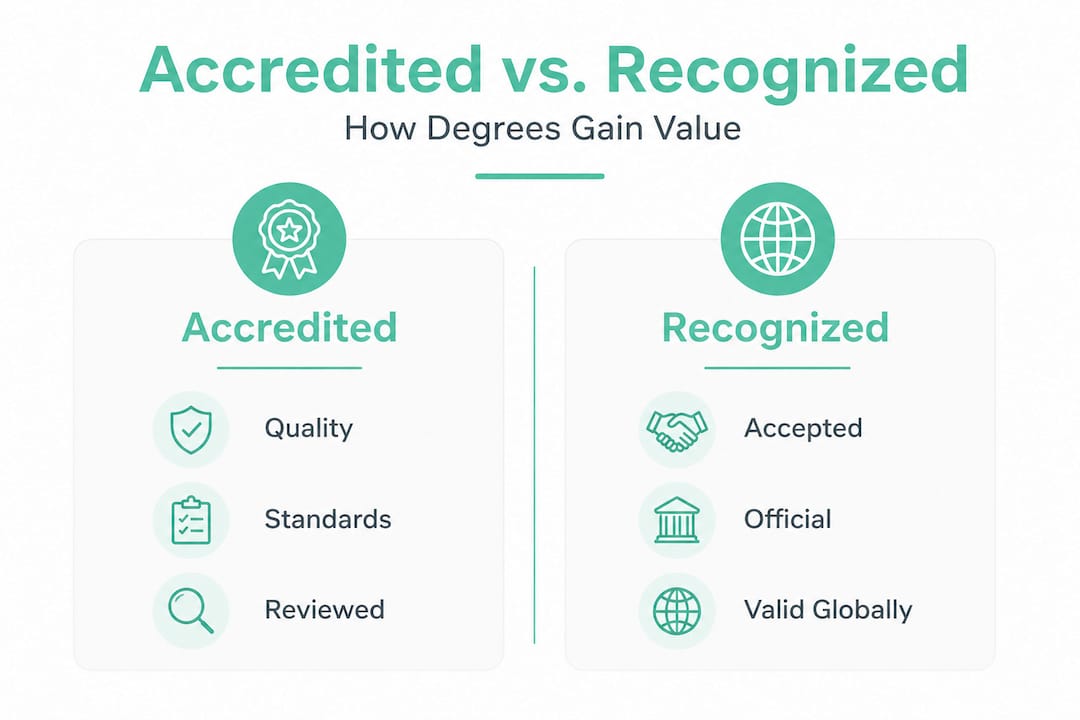
According to the UNESCO Global Convention on the recognition of qualifications, a “recognized degree” usually means a higher-education qualification issued by an institution or program that belongs to the recognized higher-education system of a competent authority in its home country, and whose value can be formally acknowledged in the destination country for study, employment, or regulated professional purposes. Notice the key phrase: destination country. Recognition is not universal. It is destination-specific and purpose-specific.
So who are the competent authorities that decide whether your degree is recognized? The answer depends on what you plan to do with it. Here are the main players:
- Universities and admissions offices: Decide whether your prior degree qualifies you for further study or postgraduate programs
- Employers and HR departments: Assess whether your credentials meet their internal hiring standards
- Professional licensing bodies: Determine whether your degree satisfies requirements for regulated professions such as accounting, law, or engineering
- Government credential evaluation agencies: Translate your foreign credentials into the local education framework
“Recognition is not a single event. It is a process that must be initiated, documented, and verified for each specific purpose and destination country.” — UNESCO Global Convention on Recognition of Qualifications Concerning Higher Education
A common misconception is that holding any accredited online degree from a university in the UK, US, or Australia automatically guarantees recognition everywhere. It does not. Understanding the difference between UK-recognized degrees and globally recognized credentials is essential before you commit to a program. The good news is that understanding this distinction is entirely manageable once you know what to look for. Knowing how degree accreditation affects your career globally is your first practical step.
Accreditation, quality assurance, and recognition: How they interact
Now that the definition is clear, it is worth understanding how three related but distinct concepts work together: accreditation, quality assurance, and recognition. Mixing these up is where most fast-track learners make their first mistake.
Accreditation is a formal review process that evaluates whether an institution or program meets a defined standard of quality. There are two main types. Institutional accreditation applies to the entire university. Programmatic accreditation applies to a specific field of study, such as business or accounting. Both matter for recognition, but in different ways.
Quality assurance is the broader framework within which accreditation operates. In Europe, the European Quality Assurance Register, known as EQAR, maintains a database of approved quality assurance agencies. The DEQAR system within EQAR allows you to search whether an agency reviewing your institution is itself recognized. However, EQAR is a European tool. It does not apply globally.
Recognition is the separate, downstream decision made by a competent authority in your destination country. As EQAR confirms, accreditation is a practical mechanism used to establish whether a degree is “recognized” in a quality and standards sense, and it is often what downstream institutions and employers expect you to demonstrate. But demonstrating accreditation is not the same as receiving recognition.
Here is a comparison to make these distinctions concrete:
| Concept | Who grants it | What it controls | Why it matters |
|---|---|---|---|
| Accreditation | Accrediting agencies (e.g., AACSB, Ofqual) | Quality and standards of institution or program | Signals credibility to employers and further institutions |
| Quality assurance | QA agencies (e.g., EQAR members) | Ongoing monitoring of educational standards | Ensures consistency across programs over time |
| Recognition | Competent authorities in the destination country | Formal acceptance for study, work, or licensure | Determines whether your degree is legally or professionally valid abroad |
Pro Tip: For management and accounting degrees specifically, look for programmatic accreditation from AACSB (Association to Advance Collegiate Schools of Business). AACSB-accredited programs are widely respected by employers and graduate schools worldwide, making the recognition process smoother in most destinations.
Here is a quick checklist when evaluating any program:
- Check that the institution holds national or government-recognized authority to award degrees
- Confirm that the program has relevant programmatic accreditation (AACSB for business and accounting)
- Research whether employers and licensing bodies in your target country explicitly accept these credentials
You can start by reviewing accredited online programs and comparing them against the standards expected in your destination country. Learning more about business school accreditation will also help you ask the right questions before enrolling. For a broader understanding, exploring higher education accreditation and its implications is worthwhile.
Recognition steps for fast-track online management and accounting degrees
You now understand the theory. Here is what you actually do, step by step, to protect yourself before enrolling in a fast-track online degree.
1. Verify institutional authority and accreditation
Start with the institution itself. Is it regulated by a government or national authority that grants it the legal right to award degrees? In the UK, for example, institutions regulated by Ofqual and holding degree-awarding powers are part of the recognized higher education system. This matters enormously when your degree is assessed by foreign authorities.
2. Confirm programmatic accreditation in business or accounting
Institutional accreditation alone is not always enough for professional careers in management and accounting. Check whether the specific program holds AACSB or equivalent programmatic accreditation. Some licensing bodies for accountants, for example, specifically require graduates to come from programmatically accredited schools.
3. Use credential evaluation services
Credential evaluation services translate your foreign degree into the local framework of your target country. In the US, no single federal authority automatically validates foreign degrees. Recognition typically depends on the institution, employer, or licensing agency’s review and often requires a credential evaluation. Common evaluation services include WES (World Education Services) and NACES-member organizations.
4. Check employer and licensing agency policies directly
Do not rely on the university’s marketing materials alone. Contact the employer or professional body in your target country and ask them directly whether they recognize degrees from the specific institution and program you are considering. Get the answer in writing.
The UNESCO Global Convention emphasizes that for fast-track, accredited management and accounting degrees delivered online without relocating, learners must verify institutional accreditation and authority to award degrees, relevant programmatic accreditation, and whether the destination country or employer accepts those credentials for the intended purpose.
Statistical callout: In the United States, there is no single federal body that automatically recognizes or validates foreign degrees. Each institution, employer, or licensing board makes its own determination, often requiring a formal credential evaluation from a recognized service.
Understanding international study pathways can also help you plan smarter. If you are building toward a global career, exploring accredited qualifications for international careers will save you significant time and frustration later.
Pro Tip: Always re-verify recognition whenever you change your destination country, switch industries, or pursue a new career goal. Recognition is not a one-time check. Rules differ by employer, professional sector, and country, and they change over time.
Common pitfalls and misconceptions about recognized degrees
Even well-informed learners make avoidable mistakes. Here are the most common ones and how to sidestep them.
Most frequent mistakes fast-track learners make:
- Trusting marketing claims that a degree is “globally recognized” without checking official sources
- Skipping the credential evaluation step because the university “promises” recognition
- Ignoring programmatic accreditation and focusing only on institutional name recognition
- Assuming that recognition in one country automatically transfers to another
- Failing to contact licensing bodies directly before enrolling
- Not asking whether online delivery or accelerated timelines affect how the credential is assessed
The marketing language used by some institutions can be misleading. Words like “internationally recognized” or “globally accepted” are often aspirational, not legally verified. The real question to ask is: recognized by whom, for what purpose, and in which country?
“Employers and licensing bodies often demand proof that a degree is recognized for the specific intended purpose, not just that the issuing institution is reputable.” — EQAR Quality Assurance Framework
Mythbusting is useful here. Online degrees absolutely can be fully recognized. The delivery format itself is not the barrier. What matters is whether the institution is authorized to award degrees, whether the program meets accreditation standards, and whether your target country’s authorities accept those credentials for your specific goal. As EQAR confirms, accreditation is the practical mechanism downstream institutions and employers use to assess recognition, so the accreditation paperwork must be bulletproof.
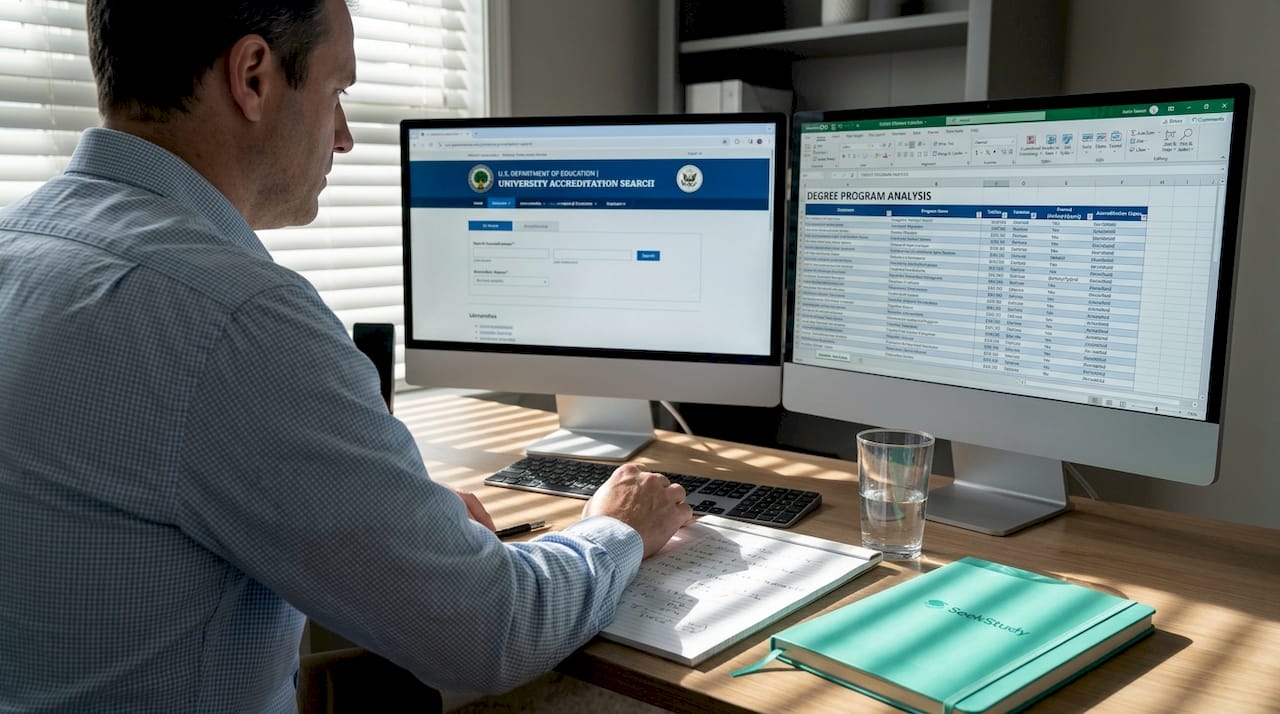
To protect yourself, use official databases and frameworks rather than relying solely on university promises. In Europe, search DEQAR. In the UK, check the Office for Students register. In the US, use the Department of Education’s database of recognized accrediting agencies. Cross-referencing multiple sources is the safest approach.
Checking accredited online programs against official registers and understanding your UK-accredited study options will give you a much clearer picture before you sign anything.
Why recognition matters more than ever in the fast-track online degree era
Here is an uncomfortable truth that most institutions are reluctant to say out loud: the growth of fast-track and online degrees has made recognition more fragmented, not less. There are now more accredited online programs available globally than at any point in history. That is genuinely good news for access to education. But it has also created a marketplace where the gap between “accredited” and “recognized for your specific goal” has grown wider.
We have spoken to adult learners who completed well-regarded, fully accredited online MBAs only to find that their target employer in Singapore or their licensing body in Canada did not recognize the program for their intended purpose. The program itself was not low quality. The institution was legitimate. The problem was a mismatch between what the institution claimed and what the specific downstream authority required.
Here is the pattern we observe most often: learners are sold on institutional reputation and accreditation status, but they skip the destination-specific verification step. Then, when an opportunity arises, they discover the gap. At that point, backtracking is expensive and time-consuming.
“Recognition is not automatic, even with top accreditations. It is crucial to double-check with each new opportunity, each new country, and each new professional context.”
Our advice is to treat recognition as an ongoing verification process, not a one-time checkbox. Every time you pursue a new opportunity in a new country or sector, treat it as a fresh recognition inquiry. This mindset protects you.
The institutions that genuinely serve international learners are the ones who help you navigate this process proactively, not the ones who simply hand you a brochure about global recognition. Understanding your international study experience options and how credentials from different countries are perceived abroad is part of what serious fast-track programs should offer. And accreditation genuinely shapes your future only when it is paired with destination-specific recognition verification.
Explore fast-track recognized degree options with SeekStudy
Navigating the recognition landscape on your own can feel like trying to read a legal document in a foreign language. At SeekStudy, we built our programs specifically so that international students and adult learners do not have to guess.
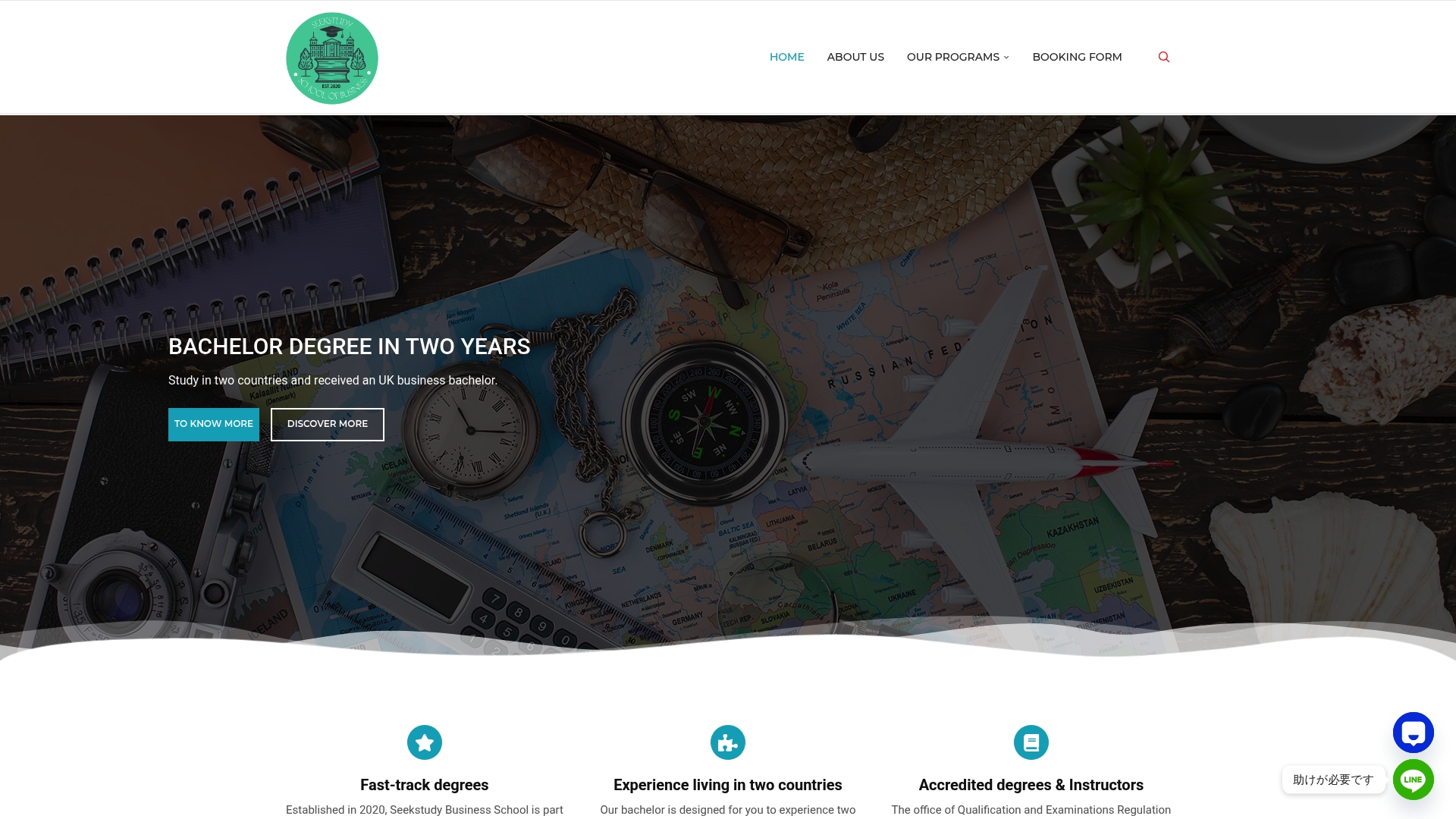
SeekStudy is regulated by Ofqual and offers accredited fast-track degrees in business management and accounting in collaboration with partner universities across the UK, Singapore, Hong Kong, and Australia. Our two-year bachelor’s degree in business management and our one-year online MBA are designed with global recognition in mind, combining rigorous accreditation standards with practical verification support for your target destination. Explore our international study pathways and accredited qualifications to find the program that works for your career goals, wherever in the world you plan to use your degree.
Frequently asked questions
How do I know if my degree is recognized in a specific country?
Check with competent authorities such as universities, employers, or licensing boards in your target country. In many cases, including the US, recognition depends on the specific institution or licensing agency’s review and often requires a credential evaluation service.
Is accreditation the same as degree recognition?
No. Accreditation signals that a program meets defined quality standards, but formal recognition is a separate process. As EQAR notes, accreditation is what downstream institutions and employers expect you to demonstrate, but it is not the same as formal recognition by destination authorities.
Can an online fast-track degree be recognized globally?
Yes, if it is properly accredited and accepted by destination authorities for your intended purpose. The UNESCO Global Convention confirms that recognition depends on the institution’s home-country standing and the destination authority’s formal acceptance of those credentials.
What happens if my degree isn’t recognized?
You may be ineligible for employment, professional licensing, or further education in your target country. According to the U.S. Department of Education, recognition happens through credential evaluation services and the decision of the relevant institution, employer, or licensing board.
How can I avoid recognition pitfalls?
Verify both institutional and programmatic accreditation, and confirm recognition with official databases or frameworks before you enroll. EQAR provides a searchable database of recognized quality assurance agencies as a starting point for European contexts, and equivalent registers exist in the UK, US, and Australia.