

TL;DR:
- International fast-track degree applications require 9 to 12 months of early preparation.
- Organizing documents, financial plans, and language tests is crucial for success.
- Thorough prep ensures students thrive in intensive, compressed academic programs.
Getting into a fast-track management or accounting degree program as an international student is not simply a matter of filling out an online form and waiting for a response. There are visa requirements, financial documents, language certifications, and personal statements all moving on different timelines. Miss one step and your application can be delayed by an entire intake cycle. A structured, well-organized preparation checklist built around 9 to 12 months of advance planning is the single most effective tool for turning your study abroad ambition into a confirmed university place.
Table of Contents
- Start early: Key criteria for fast-track university programs
- Essential documents and admission steps
- Financial planning and budgeting for international success
- Packing, travel, and pre-departure logistics
- Comparison: Standard vs. fast-track university preparation
- Our perspective: Why preparation is your secret weapon for a fast-track business degree
- Fast-track your degree journey with SeekStudy
- Frequently asked questions
Key Takeaways
| Point | Details |
|---|---|
| Start planning early | Begin your preparation at least 9-12 months in advance to handle all requirements stress-free. |
| Gather all essentials | Collect documents, prepare finances, and meet language requirements for smooth, on-time applications. |
| Budget wisely | Estimate the true cost of tuition and living and secure funding before departure. |
| Preparation is key | A structured checklist ensures success in fast-track management and accounting programs abroad. |
Start early: Key criteria for fast-track university programs
The biggest mistake international students make is assuming that a faster degree means a simpler application. In reality, fast-track management and accounting programs are more competitive precisely because they compress two or three years of learning into a shorter period. Universities want evidence that you can handle that intensity before they offer you a seat.

Preparing for university entry in an accelerated program requires you to start 9 to 12 months before your intended start date. This is not an arbitrary buffer. It is the minimum time needed to gather certified documents, secure funding, clear visa requirements, and still have space to improve your English proficiency if needed.
Here is what to build into your checklist from day one:
- Research target programs in management and accounting, noting whether they offer a 2-year bachelor’s, a 1-year MBA, or a foundation route
- Check entry requirements for each program, including GPA minimums, work experience expectations, and English test score thresholds
- Create a financial plan covering tuition, living costs, insurance, and travel
- Map all key deadlines, including application windows, scholarship cutoffs, and visa processing timelines
- Assess your current English level and enroll in preparation classes if you need to close any gaps before testing
“Starting early is not about being overly cautious. It is about giving yourself room to recover from setbacks, whether that is a delayed document, a rescheduled exam, or a visa processing delay.”
Pro Tip: Build your checklist in a shared digital document and set calendar reminders for every deadline at least two weeks in advance. This gives you reaction time if something goes wrong.
Language proficiency is one of the most underestimated elements of preparation. Programs at UK, Australian, and Singapore partner institutions typically require an IELTS score of at least 6.0 to 6.5. If your current score falls below that, you need to factor in preparation time before you even sit the test. That alone can add 3 to 4 months to your timeline.
Essential documents and admission steps
Once you have mapped your timeline, the next task is assembling the documents that universities require. This stage is more time-consuming than most students expect because many documents need certified translations, official stamps, or verification from your home institution.
Follow this sequence to stay organized:
- Request academic transcripts directly from your school or university, ensuring they are stamped and signed by an official registrar
- Obtain certified translations of all documents not in English, using a recognized translation service
- Collect your diploma or degree certificate and request a certified copy for each university you apply to
- Sit English proficiency tests such as IELTS, TOEFL, or PTE, and have official score reports sent directly to your target institutions
- Write your personal statement, tailoring it to the specific management or accounting program rather than submitting a generic version
- Secure two to three letters of recommendation from academic or professional references who can speak to your readiness for accelerated study
- Track submission deadlines for each university separately, as fast-track programs often have earlier closing dates than standard courses
The business degree checklist approach matters here because each institution has slightly different requirements. Some programs require course descriptions alongside your transcripts so they can evaluate prior learning for credit recognition. Others need a formal résumé or CV, particularly for MBA-level entry.
Pro Tip: Keep a master spreadsheet listing every university, its specific document requirements, the deadline, and a status column. Update it weekly. This prevents documents from being sent to the wrong institution or submitted after the cutoff.
Pay close attention to fast-track entry requirements for accelerated degrees. Some programs accept students with professional experience in lieu of traditional academic qualifications. This means your work history in finance, business operations, or management could be a deciding factor in your application, not just your grades.
- Check whether prior learning assessment is available
- Confirm if a foundation or pathway course is required before the main degree
- Verify whether digital or physical copies of documents are accepted
A well-prepared application tells the admissions team that you are already thinking like a graduate-level student. Attention to detail at this stage directly signals your readiness for rigorous, accelerated study.
Financial planning and budgeting for international success
Money surprises are the fastest way to derail your study abroad journey. Tuition and living expenses for international students add up faster than most people estimate, and exchange rate fluctuations can further complicate your budget mid-year.
International students should budget approximately US $41,000 per semester when accounting for tuition and living expenses at many institutions, though costs vary significantly by country and program type. Fast-track degrees compress that timeline, but the per-year cost does not disappear simply because the program is shorter.
| Expense category | Estimated annual cost (USD) |
|---|---|
| Tuition (bachelor’s, UK) | $15,000 to $25,000 |
| Tuition (MBA, 1-year online) | $8,000 to $18,000 |
| Accommodation | $8,000 to $14,000 |
| Food and groceries | $3,000 to $5,000 |
| Health insurance | $1,000 to $2,500 |
| Transportation | $1,200 to $2,400 |
| Books and study materials | $500 to $1,500 |
| Miscellaneous/emergency fund | $2,000 to $3,000 |
Here is what to prioritize in your financial planning:
- Research scholarships early. Many scholarship deadlines fall 6 to 9 months before program start dates
- Apply for institutional grants offered by your target university specifically for international students
- Open an international-friendly bank account before you leave, and check whether your current bank offers zero-fee foreign transactions
- Exchange currency before departure to avoid airport rates, and keep a small cash reserve in local currency for arrival day expenses
Explore study abroad essentials to understand the full scope of what you need to budget for beyond tuition. Application fees alone can run $50 to $150 per institution, and if you apply to five programs, that is a meaningful early expense.
Key insight: Many fast-track programs are actually more cost-effective overall than traditional degrees because you spend less time on living expenses. A 2-year bachelor’s degree costs less in total accommodation and food than a 3-year standard program, even if the annual tuition is similar.
Packing, travel, and pre-departure logistics
Your financial plan is in place and your documents are submitted. Now it is time to focus on the physical act of moving across the world for your studies. This stage involves far more logistics than most first-time international students anticipate.
The pre-departure period is when you arrange housing and airport pickup, budget for immediate arrival costs, exchange currency, pack climate-appropriate clothing and electronics, and prepare a first aid kit. The one thing experienced international students consistently advise: do not overpack bedding or food.
Use this checklist before your departure date:
- Confirm your housing at least 6 to 8 weeks before arrival, whether that is university accommodation, a private rental, or a homestay
- Book your flights early, ideally 3 to 4 months in advance, and confirm whether your university offers an airport pickup service
- Research local SIM card options so you have connectivity from your first day without relying on expensive roaming charges
- Set up digital backups of all critical documents including your passport, visa, university acceptance letter, insurance documents, and bank details stored in a secure cloud folder
- Register with your home country’s embassy in your destination country so you can be contacted in an emergency
- Confirm your health insurance coverage includes your destination country and understand the claims process before you need it
| Packing category | Pack it | Leave it behind |
|---|---|---|
| Clothing | Climate-appropriate layers, formal wear for presentations | Full seasonal wardrobe, excessive shoes |
| Electronics | Laptop, chargers, universal adaptor | Duplicate devices, bulky appliances |
| Documents | Originals and certified copies | Unnecessary paperwork |
| Bedding | Travel pillow | Full duvet set, pillows |
| Food | Sealed snacks for travel day | Bulk food stores |
Pro Tip: Research your destination climate before packing. Singapore is consistently warm and humid, while the UK has cold, wet winters. Packing for the wrong conditions is a common and easily avoided mistake.
The UK university preparation guide and English class success tips can help you align your language preparation with the academic expectations you will face on arrival. Strong English skills before you land are one of the most powerful advantages you can give yourself.
Comparison: Standard vs. fast-track university preparation
Understanding what separates fast-track preparation from standard program preparation is essential for allocating your time and energy correctly. The two paths share many common elements, but the sequencing and urgency differ considerably.
| Preparation element | Standard degree (3 years) | Fast-track degree (1 to 2 years) |
|---|---|---|
| Application timeline | 6 to 9 months ahead | 9 to 12 months ahead |
| Document complexity | Moderate | High (credit recognition often required) |
| English proficiency threshold | IELTS 6.0 typical | IELTS 6.5 or higher common |
| Scholarship research timing | 6 months before | 9 to 12 months before |
| Workload assessment | Moderate | Intensive self-evaluation required |
| Foundation course option | Often available | May be required for direct entry |
A comprehensive preparation checklist built specifically for accelerated programs accounts for these differences. Fast-track applicants need to front-load their preparation because the program itself leaves very little recovery time.
| Key takeaway | Why it matters for fast-track applicants |
|---|---|
| Start 9 to 12 months early | Compressed programs have tighter intake cycles |
| Prioritize English proficiency | Higher thresholds, less in-program adjustment time |
| Secure funding before applying | Less time to sort finances once enrolled |
| Know your workload tolerance | Fast-track intensity is not suitable for all learning styles |
The fast-track prep guide walks through the specific differences in management and accounting program requirements so you can compare options with real data rather than assumptions.
Our perspective: Why preparation is your secret weapon for a fast-track business degree
Here is something most university guides will not tell you directly. The students who struggle most in fast-track programs are rarely the ones who lacked intelligence. They are the ones who underestimated the preparation phase.
Fast-track degrees in management and accounting move at a pace that does not accommodate catching up. If you enter the program without your finances sorted, without your study habits already sharpened, or without a clear understanding of what you signed up for, the first four weeks will feel overwhelming. The academic calendar in an accelerated program is relentless.
What we have observed across students who have gone through study pathways for global students is that those who do thorough groundwork before they ever set foot in a lecture hall adapt faster, earn stronger grades in their first semester, and build a professional network from a position of confidence rather than survival mode.
There is also a common illusion that a faster degree is somehow a softer option. It is not. The credential is the same. The academic rigor is compressed, not reduced. That means preparation is not optional. It is the difference between thriving and just getting through.
Discipline invested before enrollment translates directly into flexibility after graduation. Students who arrive prepared finish their degrees on schedule, graduate with stronger academic records, and enter the job market ahead of peers who spent extra years on conventional timelines. That is not a minor advantage. In competitive fields like accounting and business management, it compounds significantly over the course of a career.
Fast-track your degree journey with SeekStudy
All of the preparation steps in this guide lead to a single outcome: getting you into the right program at the right institution with the confidence to succeed from day one.
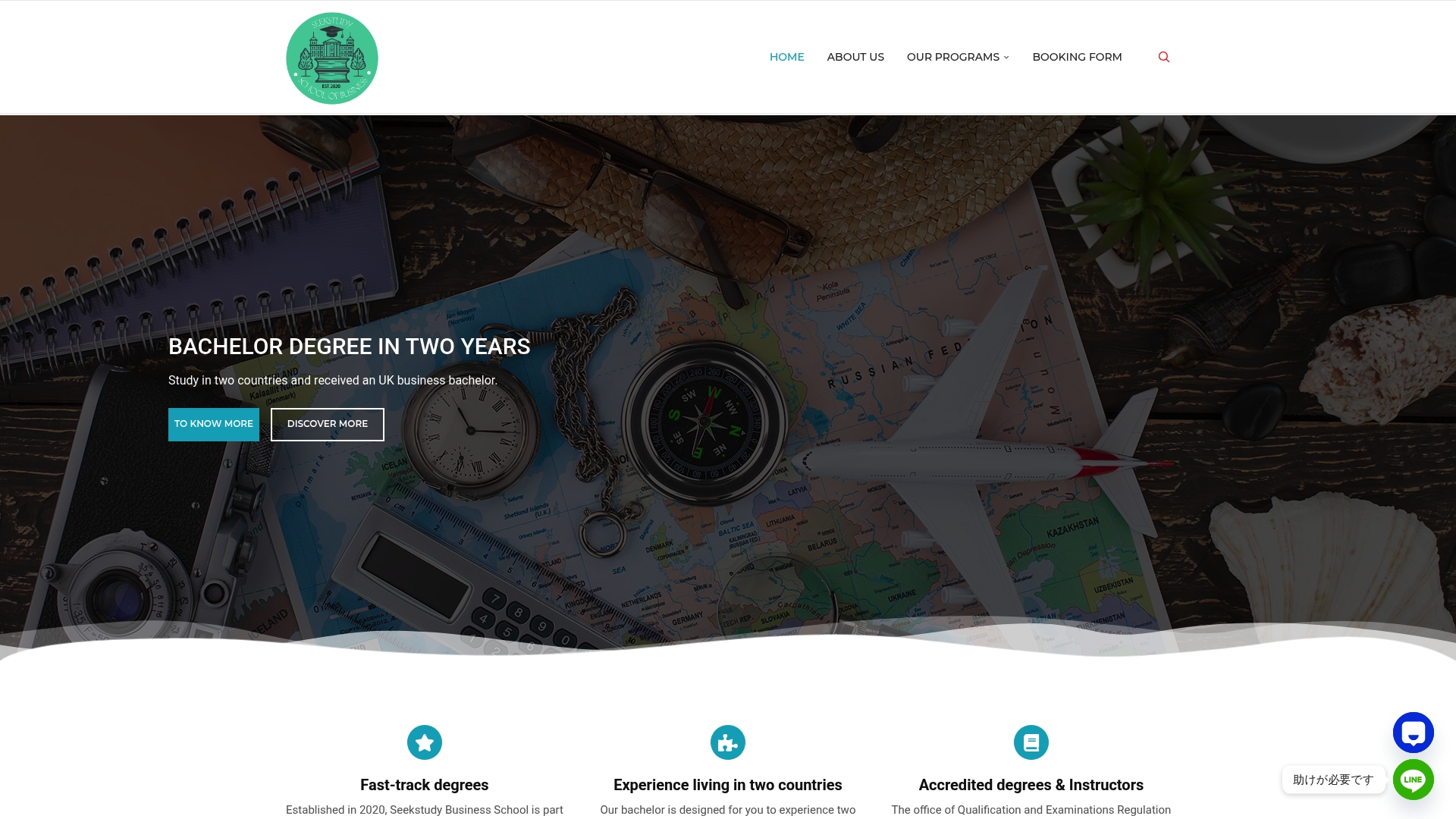
At SeekStudy, we have built our entire model around the needs of international students pursuing accelerated business degrees in management and accounting. Whether you are exploring a 2-year bachelor’s in business management, an online accounting program, or a 1-year MBA, our team provides step-by-step guidance through every stage of preparation covered in this article. Our programs are Ofqual-regulated and delivered in partnership with universities in the UK, Singapore, Hong Kong, and Australia. Start with our degree prep guide to map your specific pathway and take your next step with a clear plan.
Frequently asked questions
How far in advance should I begin preparing for international university applications?
Begin your preparation 9 to 12 months before your desired intake to allow adequate time for financial planning, document collection, language testing, and visa processing.
What are the must-have documents for fast-track program applications?
You need certified academic transcripts, standardized test scores, proof of English proficiency, a tailored personal statement, and letters of recommendation from academic or professional references.
How much should I budget for one semester as an international student?
International students should expect to budget around US $41,000 per semester for tuition and living expenses, though this figure varies depending on your destination country and the specific program.
What should I avoid packing for my university move abroad?
Skip the excessive bedding and bulk food items, as both are readily available and affordable once you arrive at your destination. Pack light and source locally.